Ketamine Music
The decline of complexity in music is driving me crazy. Music is increasingly made by non-musicians, and the results are excruciatingly monotonous. It’s a colossal failure of imagination, but I can’t fairly blame music producers, because the decline is primarily caused by forces far beyond their control, including globalization and neoliberal capitalism.
Language can decline too, or even disappear. My parents speak better than me, and write better too. They were better educated because in the aftermath of WWII, societies made an effort to be more altruistic and egalitarian. Unfortunately that effort proved short-lived. Society has failed us in much more serious ways than neglecting grammar and music theory, but we have to start somewhere.
I’m making enemies by saying this, but it needs to be said. I feel sympathy for Frank Zappa. He was strongly opposed to drug use, and held scathing opinions about music and culture, but some of his compositions were so far ahead of their time that people still don’t fully understand them. I expect he would have enjoyed this rant.
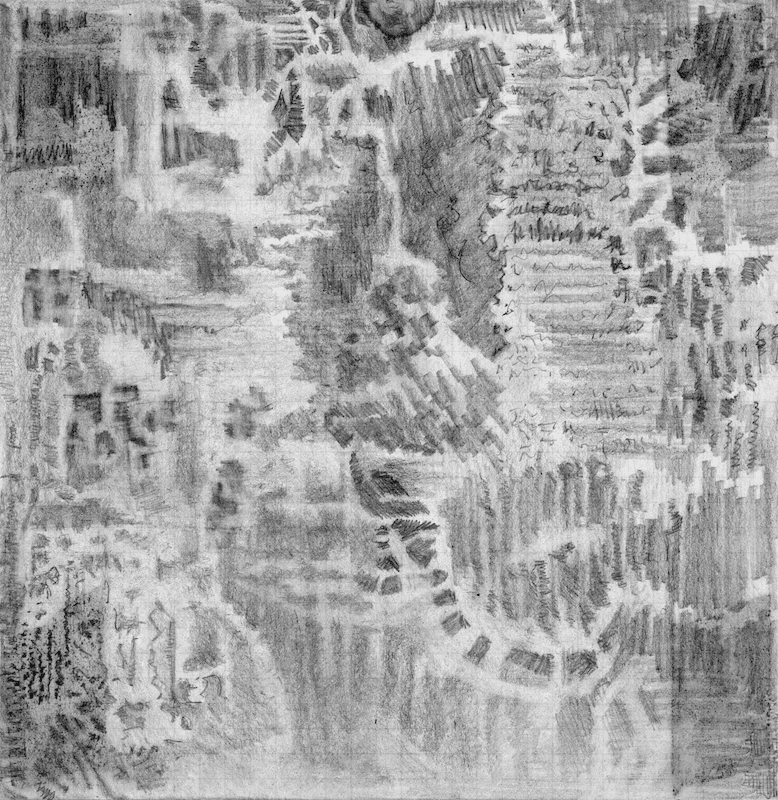
Chris Korda, Automatic Drawing 2, (1981)
I’m escaping from the disco pleasure prison. Partying is a death trap, and one of the worst things that can happen to an artist, even worse than fame. Disco1 is the epitome of neoliberalism, a monoculture of ecstatic superficiality. Capitalism has dumbed down popular taste to the point that most people don’t know the difference between musical skill and DJing, and couldn’t care less because they’re busy partying. It’s a wrenching cultural collapse, driven by the imperative of unlimited economic growth.
Disco here refers primarily to the musical genre and secondarily to venues that feature extremely monotonous and homogeneous music.
I’m old enough to remember before DJing was elevated to high art, and I refuse to accept its equivalence to Chopin, for example. They aren’t on the same scale. There’s a hierarchy of skills, and mixing records is nowhere near the apex of human creativity. Harmonic knowledge and instrumental virtuosity are being replaced by sound design and mixing, in a process I call “deskilling”: profit motive and technology combine to remove skill from what were previously highly skilled activities.
A 21st century person sees a photography exhibit and thinks “I can do that.” Nope, because having a phone doesn’t make you a photographer. What makes you a photographer is learning shutter speeds, f-stops, depth of field, the zone system, and so on until the techniques are instinctive. Photography is a skill. Now that high tech has deskilled photography and everyone thinks they’re a photographer, even more money can be made selling them apps to supposedly fix their incompetent photos.
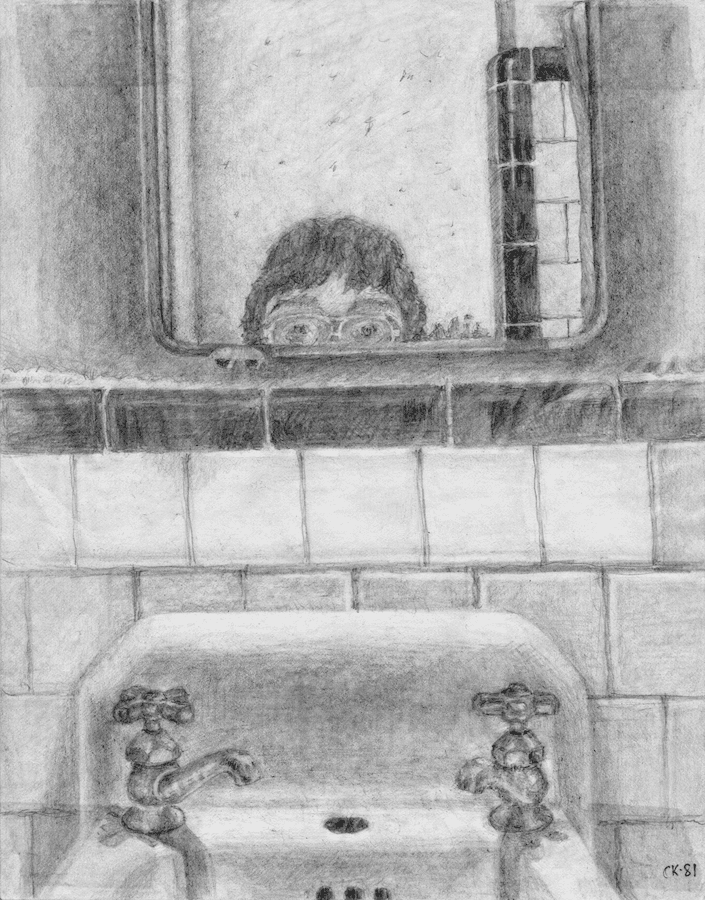
Chris Korda, Berklee Bathroom, (1981)
We arrive at a paradoxical situation in which people commonly imagine that they’re a musician, an artist, a photographer, a cinematographer etc. without having mastered the fundamentals of any of these. The democratizing effect of technology is a double-edged sword: by lowering barriers to entry, it expands access, but it also deemphasizes formal training.
Music producers sit in rooms full of blinking lights, smoke joints and twiddle knobs for hours, and the result is so dull you need anesthesia to stand it. I call it Ketamine Music. What needs to stop is the idea that making art should be easy, like spraying paint out of a can, that anyone can do it.
Art without craft is a dead end, a quaint legacy of the punk years. Attacking virtuosity as bourgeois was witty fifty years ago, but the joke’s over. Musical craft is not knob-twiddling, and mastering it requires years of study. You go to school for it. As you’ve probably gathered, I’m advocating for the revival of craft. Regrettably, this has nothing to do with beer.
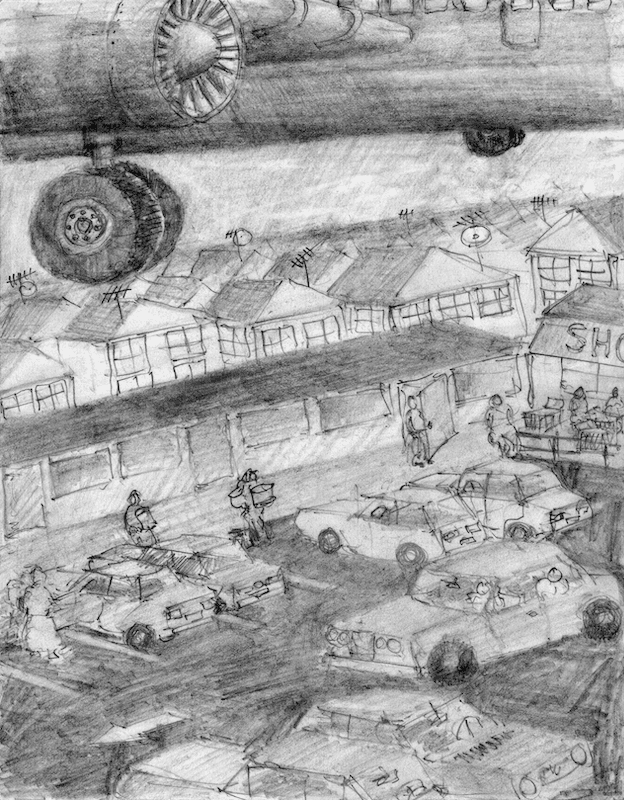
Chris Korda, Plane Over the Mall, (1981)
Lately when I meet a music producer, I ask them to spell a C minor seventh chord: which four notes is it, right now, without using your phone. Nine out of ten can’t do it. A musician who can’t spell a basic chord is illiterate, like a painter who doesn’t know what blue is. It’s not arcane, it’s elementary.
I sound like a snob, but that’s my cross to bear. I’ve witnessed enough lowbrow culture to last me ten lifetimes. For me the collapse started decades ago. John Waters’ movies are amusing, but they’re also satire, and they parody a cultural catastrophe, an epidemic of trash.
Music increasingly sounds threadbare because it has almost no music in it. If you’re a music producer and you’re still reading this, buckle up. If you can’t manage to stop using 4/4, at least stop using the backbeat. Backbeat is an unambitious rhythmic pattern at best, and was already cliché in the 1990s. Today, backbeat is utterly played out, derivative and vulgar. There are infinitely many more interesting patterns. I’ve become so violently allergic to backbeat that if I hear it, I press stop immediately.
I’m sorry if you’re triggered, but it’s constructive disruption. As long as we soak comfortably in the tepid bath water of postmodern homogenization, nothing can change. I’m trying to expand the horizons of electronic music by introducing more imaginative structures and methods. The familiar sixteen-step patterns that you mistook for the world are a tiny island, surrounded by uncharted seas.
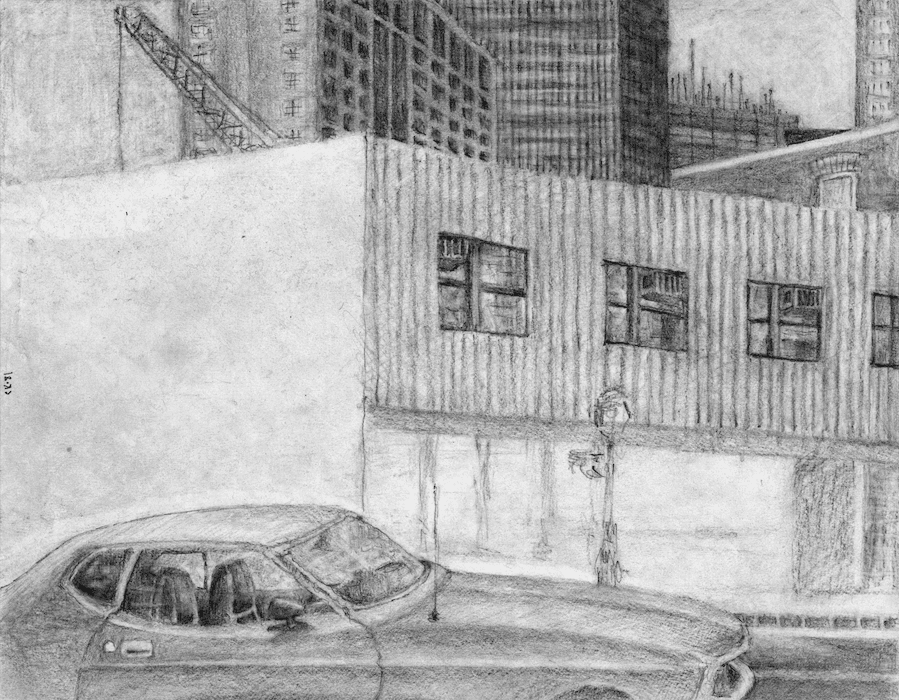
Chris Korda, Dorothy's Boutique, (1981)
DJs are the original influencers, but I don’t mean that as a compliment. The original purpose of DJing was to boost the sales of records. DJs were an arm of the vinyl industry, and are now an arm of the entertainment business, another big capitalist success. Capitalism maximizes short-term profits for shareholders by standardizing consumption. It’s easier to make money when everyone wants the same thing. If psychedelic theme parks are the best we can do, so be it, but I think we’re underachieving.
The first time I went out dancing in 1975, the anonymous DJ played all seven minutes of The Doors’ “Light My Fire” and the crowd went wild. It’s blindingly obvious that there’s been a steep decline in the complexity of music since then, and I have the academic studies to prove it.2 It’s an apocalyptic bonfire of triviality, fueled by chronic underinvestment in education: Ayn Rand’s revenge.
“…we find three important trends in the evolution of musical discourse: the restriction of pitch sequences (with metrics showing less variety in pitch progressions), the homogenization of the timbral palette (with frequent timbres becoming more frequent) and growing average loudness levels (threatening a dynamic richness that has been conserved until today).” —Joan Serrà, “Measuring the Evolution of Contemporary Western Popular Music”.
Disco was the end of an era, the final nail in the coffin of 1960s counterculture, but the neoliberal horror officially began with the elections of Margaret Thatcher and Ronald Reagan, and the assassination of John Lennon shortly thereafter. The rich finally recovered from the World Wars, rolled back the postwar reforms, and started a new Gilded Age, set to a throbbing disco beat. This will not end well.
My plea for diversity is a drop in a global bucket of conformity. I’m trying to start a musical revolution, but revolutions often fail. I declared war on crassness, and I’m losing. Iconoclasts are rarely agreed with. Vive la difference.
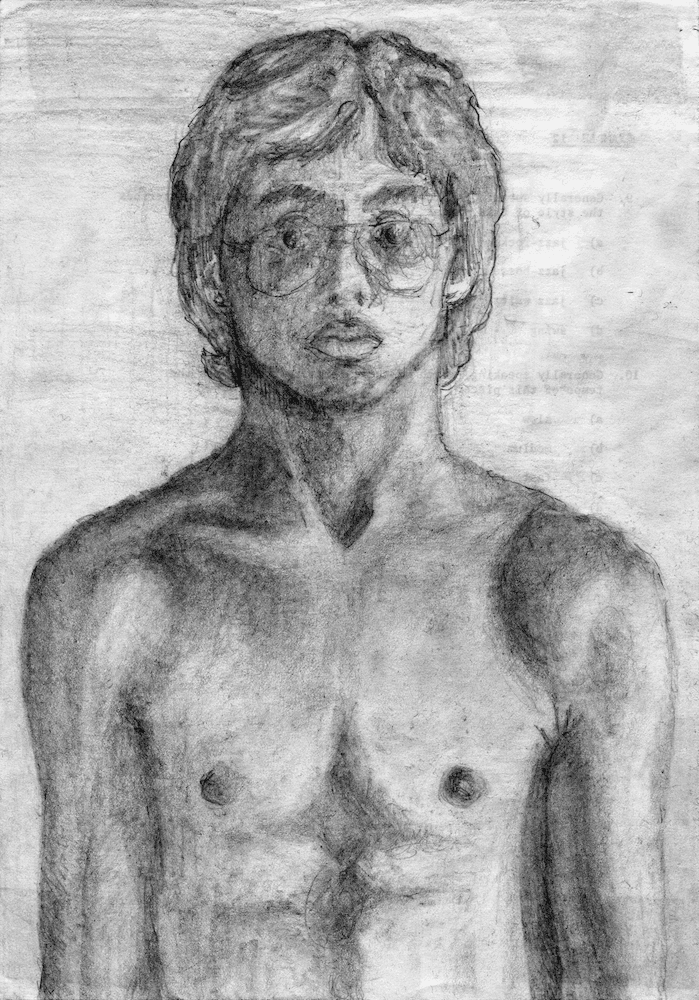
Chris Korda, Self-Portrait, (1981)
Chris Korda is an internationally renowned multimedia artist and author whose work spans thirty years and includes electronic music, digital and video art, performance and conceptual art, and culture jamming. Chris pioneered the use of complex polymeter in electronic dance music and invented a unique MIDI sequencer in order to explore polymeter composition techniques. Chris composes and performs music in a variety of genres and has released many albums on labels such as Yoyaku, Perlon, Mental Groove, and Gigolo Records. Chris also founded an antinatalist religion called the Church of Euthanasia and worked as a computer programmer for thirty-five years. Chris is represented by Goswell Road Paris and recently exhibited work at Basel Social Club.
This essay also appears in Korda’s latest book They Don’t Live, Road House, Paris, 2026.
All images courtesy of the artist and Goswell Road.
Disco here refers primarily to the musical genre and secondarily to venues that feature extremely monotonous and homogeneous music.
“…we find three important trends in the evolution of musical discourse: the restriction of pitch sequences (with metrics showing less variety in pitch progressions), the homogenization of the timbral palette (with frequent timbres becoming more frequent) and growing average loudness levels (threatening a dynamic richness that has been conserved until today).” —Joan Serrà, “Measuring the Evolution of Contemporary Western Popular Music”.
finanziato dall'Unione Europea - Next Generation EU