Late-Night Calls
In Rome, the writer Tom McCarthy met the artists Andrea Winkler and Stefan Panhans. At the Villa Massimo, where Winkler and Panhans are artists-in-residence, they discussed Martin Heidegger’s hallucinated late-night call to Jacques Derrida, arguably a decisive moment in the recent history of philosophy, and they spoke about video game characters who move through cities like Don Quixote roaming early modern Spain or like Frankenstein’s creature traversing wintry landscapes, and they mourned the loss of glitches in the upcoming instalment of Grand Theft Auto.
Well, where are we?
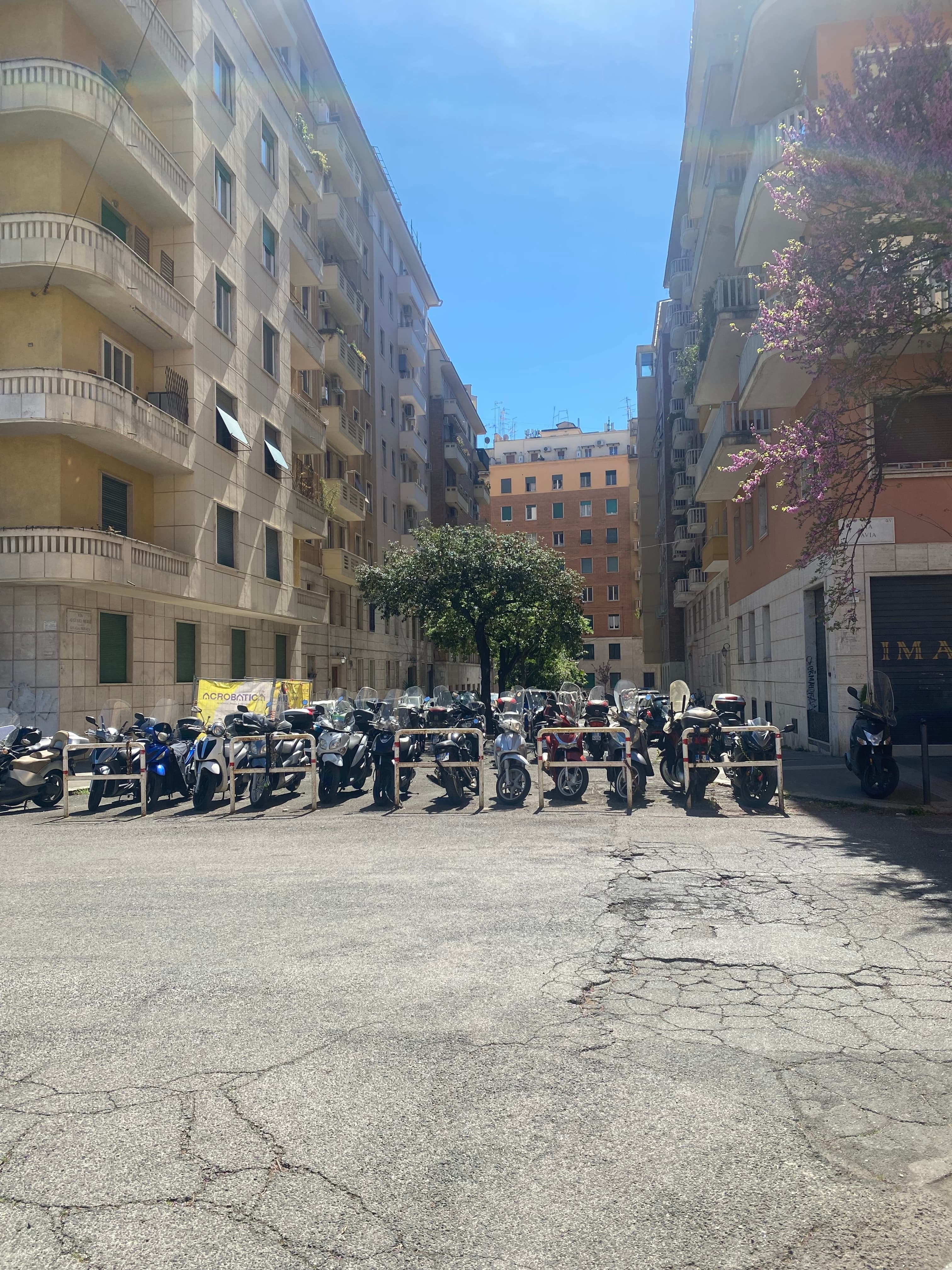
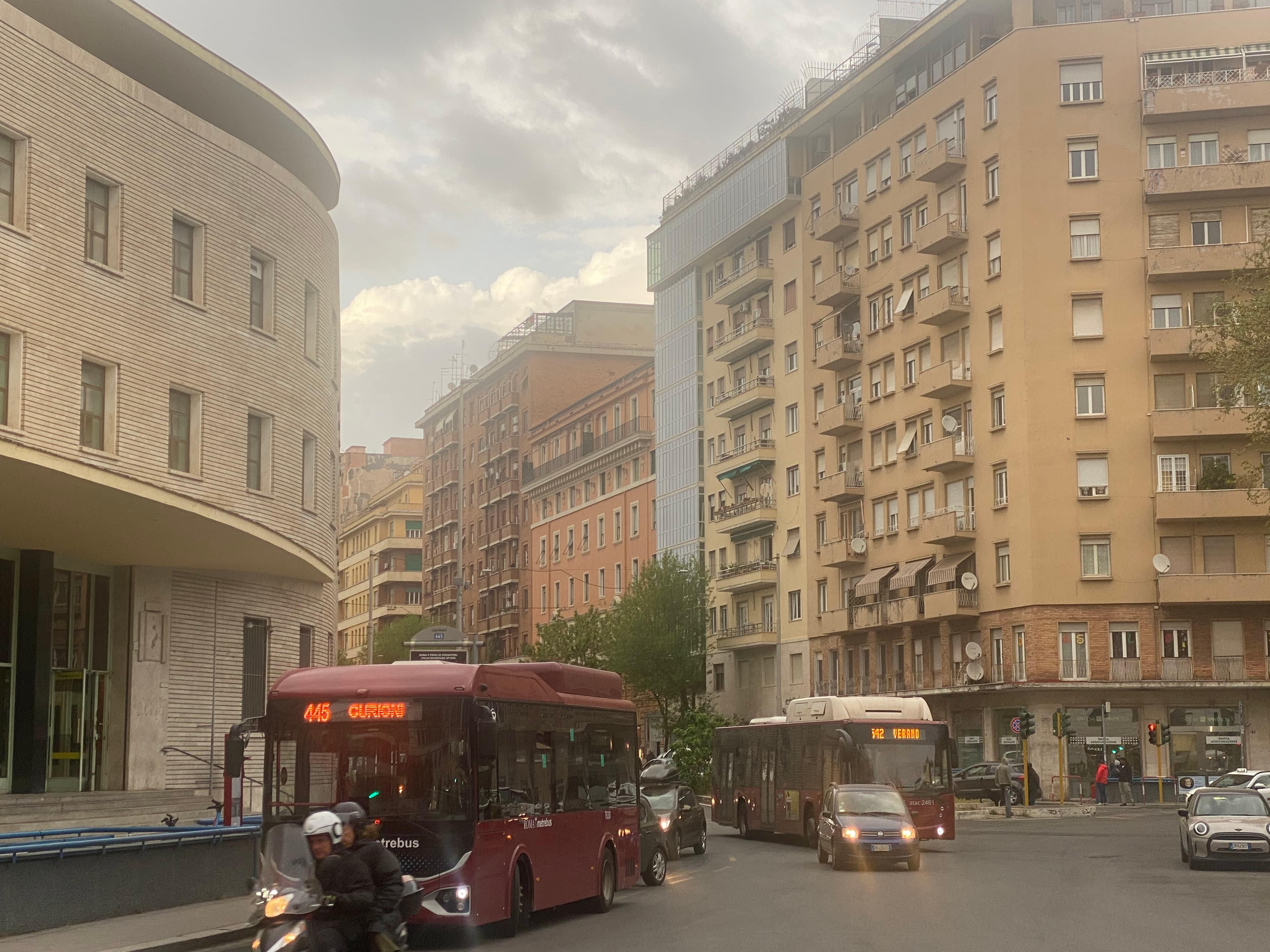
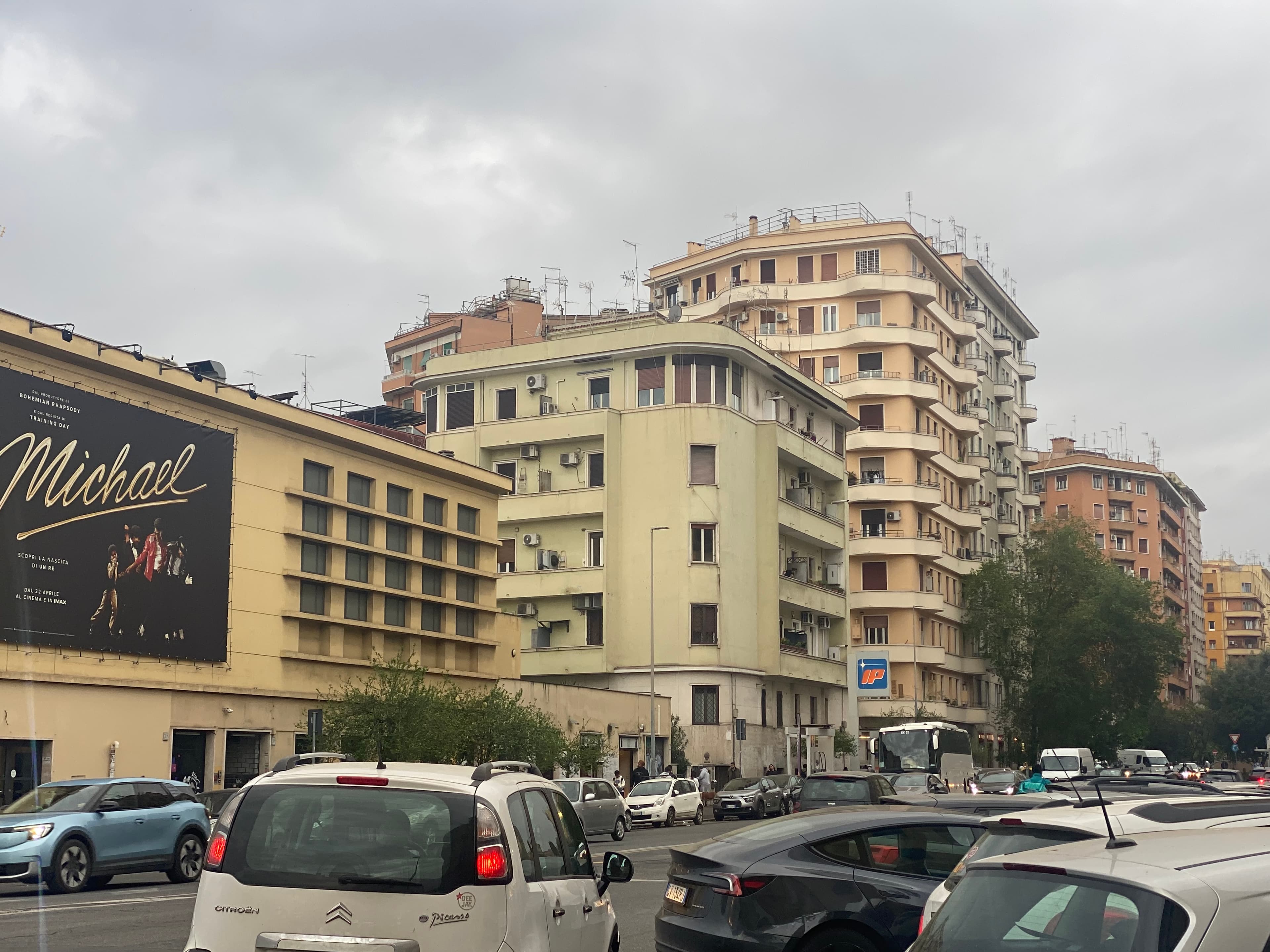
We are at the Villa Massimo, which houses the German Academy in Rome–every country has an academy here. This is an interesting part of Rome, near Piazza Bologna, which is not very touristic, and it didn't exist in the 19th century. It was mainly built during the 1920s, 30s, and even 40s. There is a lot of architecture from the fascist period in this neighborhood.
But Villa Massimo is not part of that. We are Rome Prize winners and were sent by the German Ministry of Culture for ten months. The villa’s main building and the studios were opened in 1910.
You would think the studios are very modern, but they were built this way. They are perfect for the needs of artists, huge, with northern light, and adjacent apartments.
And why am I here?
Because we invited you, so that the other Rome Prize winners can also appreciate you and your work.
We worked together on an exhibition I guest-curated at Kunstnernes Hus in Oslo, a brutalist building that would not be out of place among some of the architecture in this neighborhood. We chose the title Holding Pattern for the exhibition, that is Warteschleife, because the show was about the sense of humans being embedded in technological systems that they don’t fully understand. When you’re in an airplane in a holding pattern, you understand that you are controlled by some big network of radar and radio technology. There is also a sense of choreography. Holding patterns are very complex and very beautiful, like vorticist geometric shapes. We had a work in the show by Harun Farocki, Deep Play (2007), which is all about the patterns and choreographies of a football game. Not just the match: it also shows the police controlling the crowds in the stadium, and the media controlling which camera angle to film it from. We had a piece by Susan Philipsz, Ambient Air (2021), where she’s flying above Tegel Airport, Berlin, and hums Brian Eno’s Music for Airports into a radio tower over a radio headset. The humming of her voice was transmitted throughout the airport. And we had your work, Freeroam À Rebours, Mod#I.1 (2016).
We named it in reference to Against Nature by Joris-Karl Huysmans. We are going against the nature of the game’s goals to have a perfect plot and perfect movement.
It was based on Grand Theft Auto.
Free Roam is an online version of GTA V, the latest version of the game, which came out in 2014. We love looking at footage of GTA V, and we fell in love with the parts where movement fails. There are glitches and algorithmic imperfections because until now, they have not been able to make the movements appear real. There is always something uncanny about them. We found many imperfections and downloaded them to create an archive. We picked some of them and reenacted them with real people, dancers, actors, and a choreographer.
She studied these movements and trained the dancers. They were like hard drives, where you erase your old movements to add new patterns. Our focus was on very small insufficiencies. A journalist called it a dance of insufficiency. It does not keep up with expectations nor with the gain-oriented logic of proceeding in the game: keep moving, killing, stealing, and so on.
Some of your earlier works sampled self-optimization and motivational speeches, and mixed them with scripts from megachurches and car manuals. The way you collaged it made the monologues glitch and interrupt, like a Gertrude Stein text. The ideology and the aesthetic of the game are about the fantasy of smooth traversal of space, but you managed to draw out the exact opposite.
That’s what we are interested in. It is also fun to do it, and we see it as a form of utopia. We get increasingly trained by machines. Chatbots demand a certain language, and we get more and more used to adapting to this kind of language. Perfect motions and non-stop action, perfect plots and perfect movement through space are not only required in gaming but also in films and ultimately in our lives! We wanted to interrupt that.
This is where our work intersects.
This is one of your major topics: how technology influences the systems we move in. Often, we don’t see the technology. We only get a glimpse. But that’s where you really convey the way technology reaches profound areas.
In my last couple of books, the technological matrix has been more evident. It is harder to ignore it in the age of smartphones, when algorithms wage war and decide who lives or dies. Even before that, in Remainder (2005), the first novel I published, which is not really about technology per se, but it has a logic of people being trained. The protagonist is in an accident and has lost some motor function. He has to be trained by physiotherapists to do basic movements by repeating them, again and again and again, even if he is just picking up a cup of coffee. After that, he is ninety-five percent recovered, but he still moves like your dancers in Free Roam. He is imperfect when he walks down the street, not doing it quite right. He has a sense that he is imitating the ideal movement of walking down the street rather than just walking: he is reenacting it. He has moments where he watches other people, and he can identify a group of cool teenagers moving and turning in a particular way, and recognize which ad or movie they have internalised and reproduced. Interestingly, when the book came out, one reviewer suggested that I’d read “Über das Marionettentheater” (1810) by Heinrich von Kleist and that this book was an updated version of it. But I hadn’t, so I immediately read it. Kleist’s idea is that marionettes are perfect because they have no consciousness. Gravity and physics make them flow into their movements. Even the best dancer can never be as good as a marionette because there will always be this gap, a décollage, a disconnect. The short circuitry of being aware of what they’re meant to be doing as they do it–it is interrupted. Kleist turns this into a theological configuration when he says you have to either be a marionette, a puppet without consciousness, or a god with total consciousness. Anything in between is imperfect, and that is the condition of being human. This theme seems to run through literature, because even earlier than Kleist, in Cervantes’s Don Quixote (1605), it is almost like a Grand Theft Auto video game fantasy. He wants to move across a landscape in a particular way. He aims to inhabit a narrative in which he is a knight who kills giants. But he doesn’t get it right because his horse is lame, and he’s an idiot. The visor of his helmet is made out of cardboard, and he can’t see. He falls and reboots. There are interesting moments in your film, and they connect directly with Remainder. There is a scene in the novel in which the protagonist reenacts the death of a local gangster. He wants to play the role of the victim himself, again and again and again, to experience the almost transcendental moment of being shot, like a martyr–but without actually dying. In your work, you concentrate on the moment where someone is shot, and they fall but then bounce back up.
I think you have written about these figures as zombies, where you don’t know if they are alive or dead.
They are in limbo.
I wanted to digress to marionettes. Does the perfect movement of a marionette mean that they are in total control of themselves, or is it something guiding them without their knowledge? Quixote and the avatars in the scenes we are reenacting in our film are slightly out of control.
I guess for every marionette there is a puppeteer, right? You get this a lot in David Lynch's movies. In these technological worlds, there exists the fantasy of a control room somewhere, especially in Inland Empire (2006), where there is an inner chamber with mechanical rabbits. In Mulholland Drive (2001), you have a strange meeting with a little man called Mr. Roque in a control room. He speaks into a microphone and seems to be issuing instructions.
And he is everywhere.
He is. His network is everywhere, and he is speaking through code. It is very paranoid, conspiratorial, a structure that Thomas Pynchon’s novels often play with. Where is the secret backroom where all of this is being manipulated from?
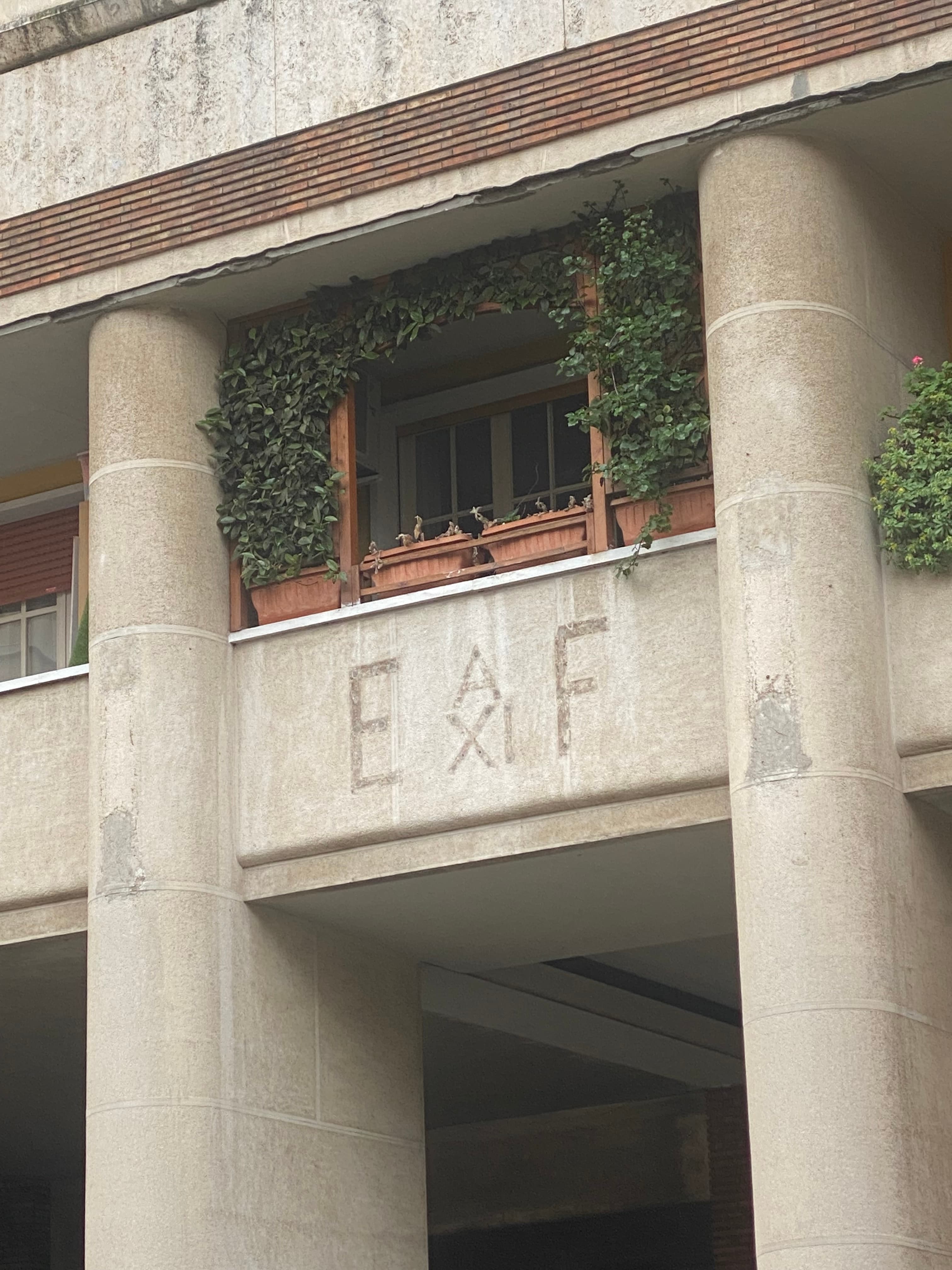
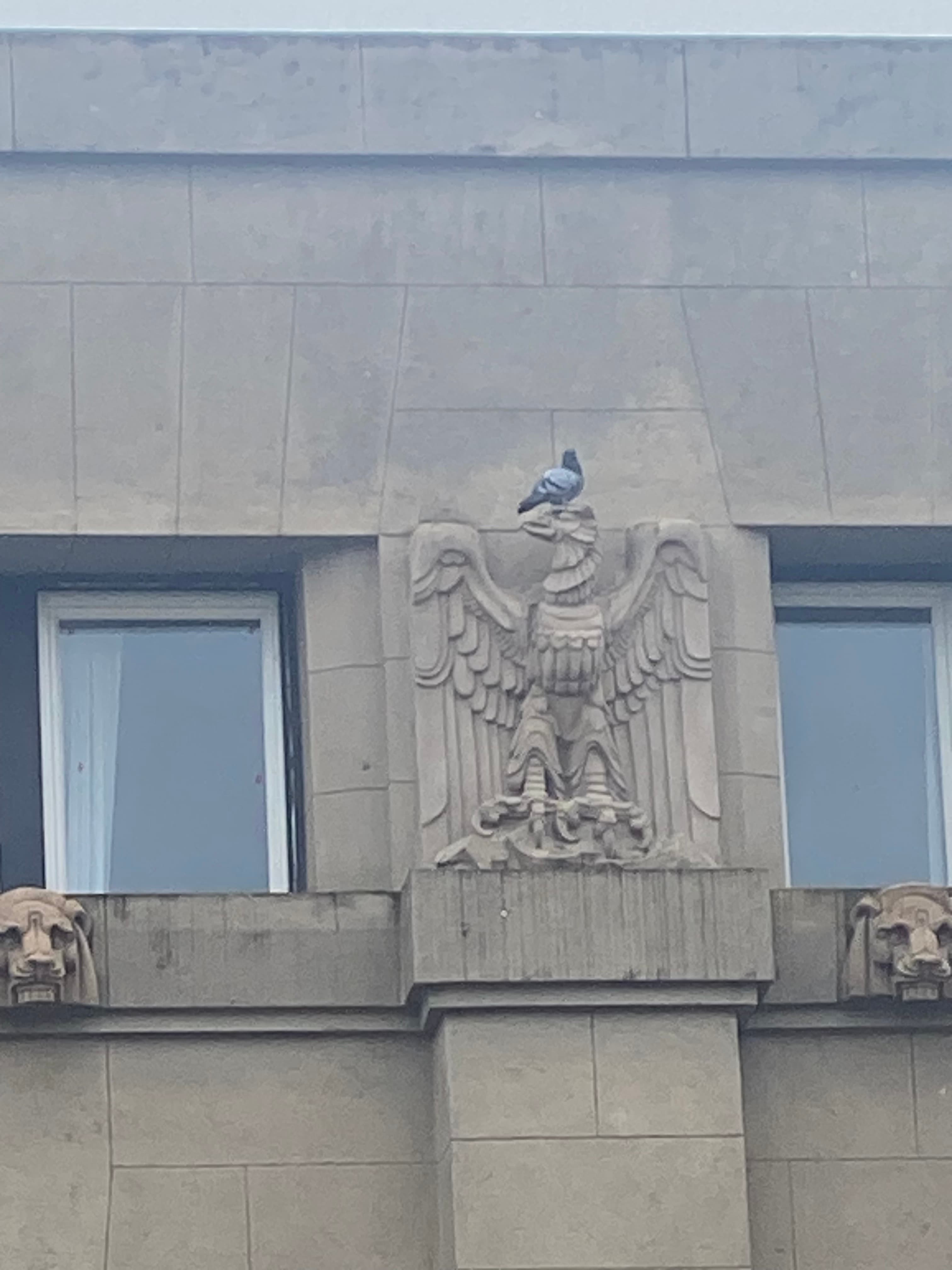
This takes us back to the techno-feudalism we live in now. Or is it techno-fascism at this point? We are surrounded right now where we sit by buildings from Italy’s Rationalist movement, which thrived under Mussolini, and in this case is very beautiful, but when it comes to today’s all-powerful tech bros and their anti-democratic pre-fascist ideas, things are certainly not looking good.
It is good architecture. Beautiful public libraries and curved cinemas.
It’s Italian–the Italians know how to build. Fascism in Italy lasted so long, much longer than in Germany. There is a variety of architecture, some of it refers to the Roman Empire with bricks and light walls, and then some is totally influenced by Futurism. That’s why it is not so easily detected. This neighborhood was established in 1911 and then underwent rapid development, primarily as a residential zone, during the twenty years of fascist rule. They built many housing projects, and wanted workers to have good housing, heating, and a water supply. That’s why these structures are still in a very good state. They were meant to create a good human being.
One that works well.
But also one that can be controlled. It is puzzling to us that Italy doesn’t have such a bad conscience about the past. They had to remove fascist symbols–the fasces–from buildings but not from artworks.
We just walked past that big monument; they’d removed the fasces but not the writing.
One of the ten studios at the Villa Massimo housed Arno Breker as one of the first fellows, in 1932. He was a famous fascist sculptor. And now he is famous on TikTok because of one male bust he sculpted. The work is loved by the young ragazzi because it depicts a spectacular jawline. Many young men are getting surgery to obtain that jawline. And it’s really Breker’s sculpture–a new role model.
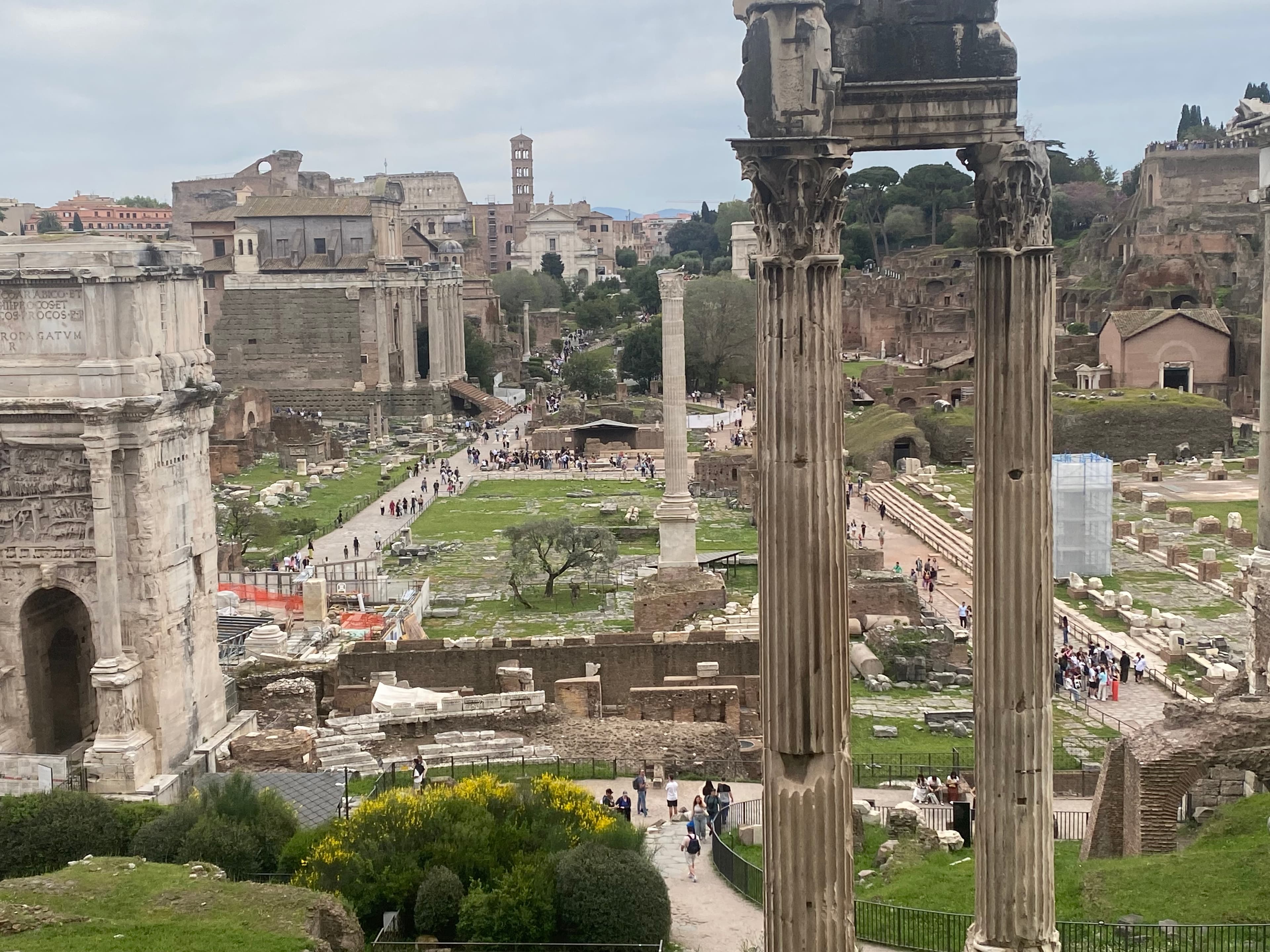
You mentioned Futurism as well. Marinetti is such an important figure for modernism, and he started on the left but became a fascist. His work is important to me as a writer. I couldn’t have written my novel C (2010) with all its reflections on man multiplied through the machine age, and I don’t think Gilles Deleuze and Felix Guattari would have written A Thousand Plateaus (1980), or Donna Haraway would have written her Cyborg Manifesto (1985), had it not been for Marinetti. That high modernist moment is interesting. You had Gabriele d’Annunzio and Ezra Pound. These are good artists. In the last decade or so, a young Italian ‘post-fascist’ group has taken up Pound’s name, calling itself Casa Pound. But if we’re thinking about technology and the figure of the worker, let’s consider Ernst Jünger: An important writer, but also a German fascist. He wrote a book about the worker as a machine-like assemblage of body parts–like in your piece Free Roam, when you consider how parts move and how they are integrated into an aesthetic and social order. But he has a left-wing parallel in a figure like Aleksei Gastev, from whom I stole a lot for my last book, The Making of Incarnation (2021). Until he was killed by Stalin, he was a committed communist, an artist who believed that factories, tools, and the physical gestures of proletarian labor are a way of liberating not just the workers from capitalism, but also from bourgeois, humanist individualism, unlocking that reactionary configuration into something expanded and socialist. It is interesting how close Gastev is to Jünger, although one is far left and the other far right. Maybe Rome is the ideal place to talk about this, a city full of ruins and ruined projects. What do you do with all this stuff? Is it toxic? Some people say, don’t touch Heidegger, he is a Nazi. I think it is interesting that many of the people who took the opposite approach to this–Hannah Arendt, Jacques Derrida, Emmanuel Levinas–are Jewish. There is this amazing moment in Derrida’s book The Post Card: from Socrates to Freud and Beyond (1980), where he writes about Heidegger in relation to philosophy and being, postal systems, and communication. There is a long footnote where he says that at 1am, when he was typing up these notes, the telephone rang and the operator said there was a long-distance call from America, and that there is a Martine or Martini Heidegger on the line, who wants you to pay for the call. Do you accept? Heidegger had been dead for four years at this point. Derrida was listening to the static, the Geräusch. He thinks he can hear voices on the other end, and he says, no, this is a joke, I don’t accept. He hangs up. Then he has a footnote to the footnote that says, of course, I accept. I will always accept that the network of my hook-ups is on the burdensome side, and I need more than one switchboard to digest the overload. A beautiful moment! It’s probably the most important moment in the history of philosophy, maybe after the poisoning of Socrates: the moment where Derrida could have said no or yes, and he says neither. I’m not paying–but then, like Joyce’s Molly Bloom, he says yes.
To the call.
He says no to the call, but in the book, and through the often-repeated words j’accepte (which is also Jacques and the seven–sept–letters of his last name), he lets Heidegger flow through that moment and through the rest of his work. I guess so much of our work is navigating toxic ruins, and the question is what to build from them.
It seems like we are all navigating toxic ruins. We are always trying to create art with its own aesthetic rules. It is not activist, but our present is in it. You seem to do the same in your books.
We have read a draft passage from your forthcoming novel, The Rhyl Poster (2026) and wondered about the main character.
I owe that passage, in which the character is daydreaming his way into a video game, to your work, and to a couple of pieces by Harun Farocki. I started looking at GTA gaming sequences on YouTube, and it seemed very classical. Tomorrow I’m recording a discussion for the London Review of Books about Frankenstein (1818) by Mary Shelley, and this monster, who again moves imperfectly and is neither alive nor dead. He is a technological creation and goes around trying to be good. But he always just kills people. Then his inventor is trying to kill him. Who is the agent, who is the puppet? In gaming, is it the person playing this game? Or is it the designers who have plotted it? My new novel is about the law. The hero is a jurist, a legal theorist at the Court of Justice of the European Union. But he’s also a drug addict. He leaks secret, sensitive documents to shadowy networks that have links to Silicon Valley and Moscow. I’m fascinated by this relation to the law and criminality in Frankenstein or Grand Theft Auto: the ambiguous situation where the hero is at once an outlaw, or, to put it in Agamben’s term, a homo sacer–a person outside the law who is nonetheless contained by the legal system, but as an exception. The avatar in Grand Theft Auto is a criminal who goes around stealing cars and killing people. But he is almost like an agent of the law, like the gun-slinging sheriff in the Wild West, Clint Eastwood, or the hero of High Noon (1952), who has to kill everyone in order to create justice. I find that ambiguity fascinating. Before my character was a jurist, he was a surveyor in the British army in the second Iraq war. I found out in my research that the vocabulary of law and justice arises from the vocabulary of geometry and surveying: measuring, ruling, règles, Regeln, Recht. The idea of right, as in right angles, and something being ‘justified,’ comes from geometry. It has to do with the apportioning of space, the demarcation of boundaries, and the laying out of geometries of ontological and political civic space.
The first time I noticed Free Roam, the unlocked, plot-suspended version of GTA V, was in an essay in Süddeutsche Zeitung. They wrote about it because there are no rules, and you can do whatever you want. You can produce spectacular accidents, like driving cars into airplanes. The essay referred to the game as art because–if one follows the author’s view–there seem to be so many unconscious wishes in it. A somewhat problematic but interesting statement.
Visually and aesthetically, the glitches are incredibly beautiful. They are like collages or assemblages, cubist and surrealist, of different bits of a body, cars, and guns.
The beauty of this game was captured years ago, and for ten years they’ve been working on a new version! I’ve seen a little bit of it, and it’s not so beautiful anymore; it is too smooth.
I found out that the technical term for the mistakes in a visual interface is an artefact–a synonym for glitch. Like an object in a Roman museum or a work of art.
Tom McCarthy is a novelist whose work has been translated into more than twenty languages and adapted for cinema, theatre and radio. He is recipient of the Believer Book Award and the Windham-Campbell Prize for Fiction, an Internationaler Literaturpreis Finalist, and a two-time Booker Prize Finalist. He is also author of the study Tintin and the Secret of Literature, and of the essay collection Typewriters, Bombs, Jellyfish. His new novel, The Rhyl Poster, will be published in October 2026. Since 2022 he has held the position of Miller Scholar at the Santa Fe Institute New Mexico. Originally from London, he now holds joint Swedish-British citizenship, and lives in Berlin.
Stefan Panhans & Andrea Winkler have been working together since 2016 on transdisciplinary video installations whose cinematic moments combine performative with dialogical and musical elements and, expanded into expansive stagings in exhibitions, become hybrid spaces of experience. Phenomena of immaterial work, the self-optimization imperative, hypermediatization and the resurgence of right-wing ideologies shape their works, as do digitalization under the conditions of a backlash towards neo-feudal capitalism and its social and socio-political effects. Formal references to mainstream forms of entertainment such as the musical, streaming series or gaming are cited, but at the same time subverted. Their works are frequently shown and awarded internationally in exhibitions and at film festivals. They are currently Rome Prize winners in residence at the Villa Massimo, Rome.
All images courtesy of Stefan Panhans and Andrea Winkler.
finanziato dall'Unione Europea - Next Generation EU