

Echoes
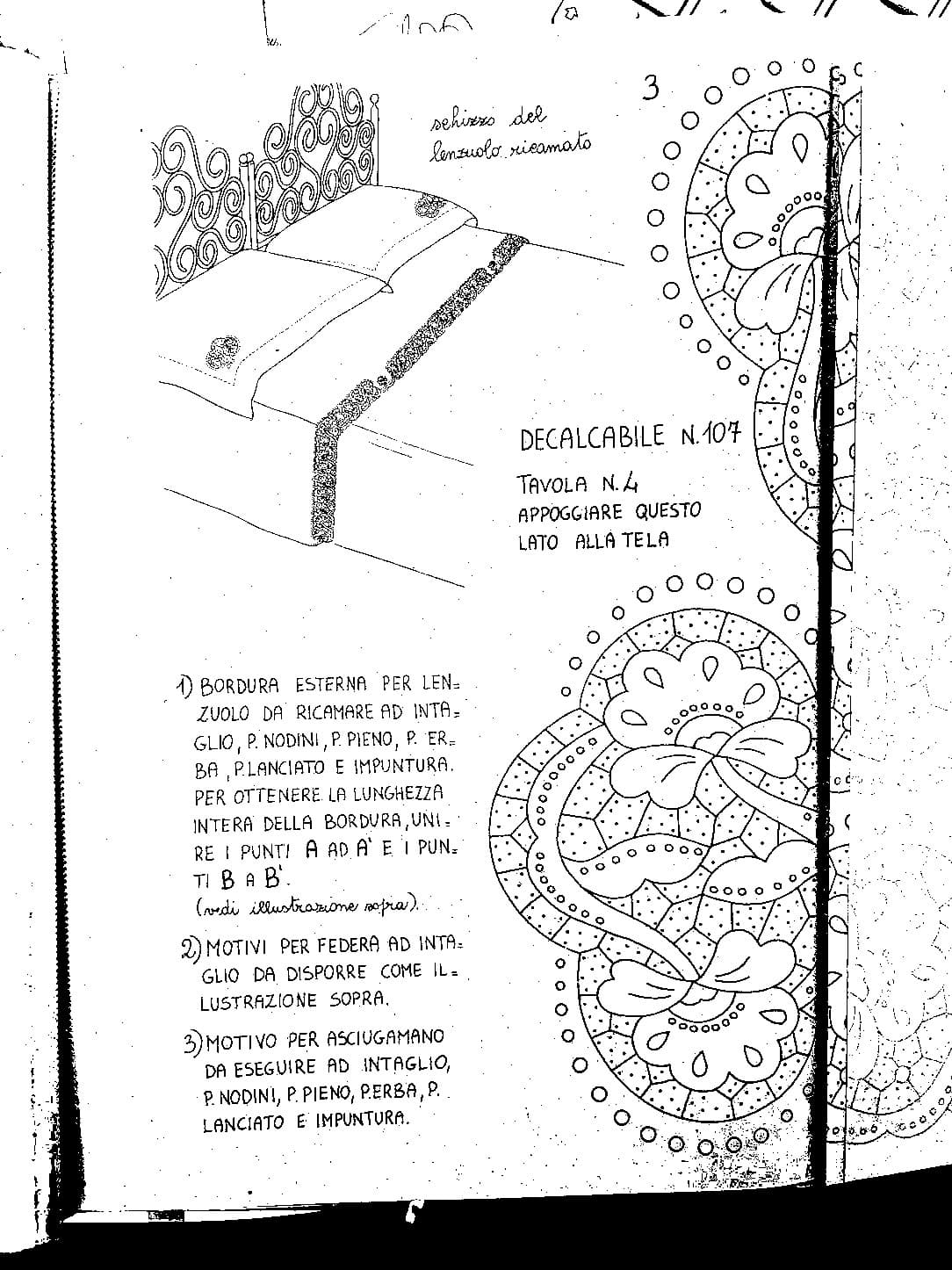
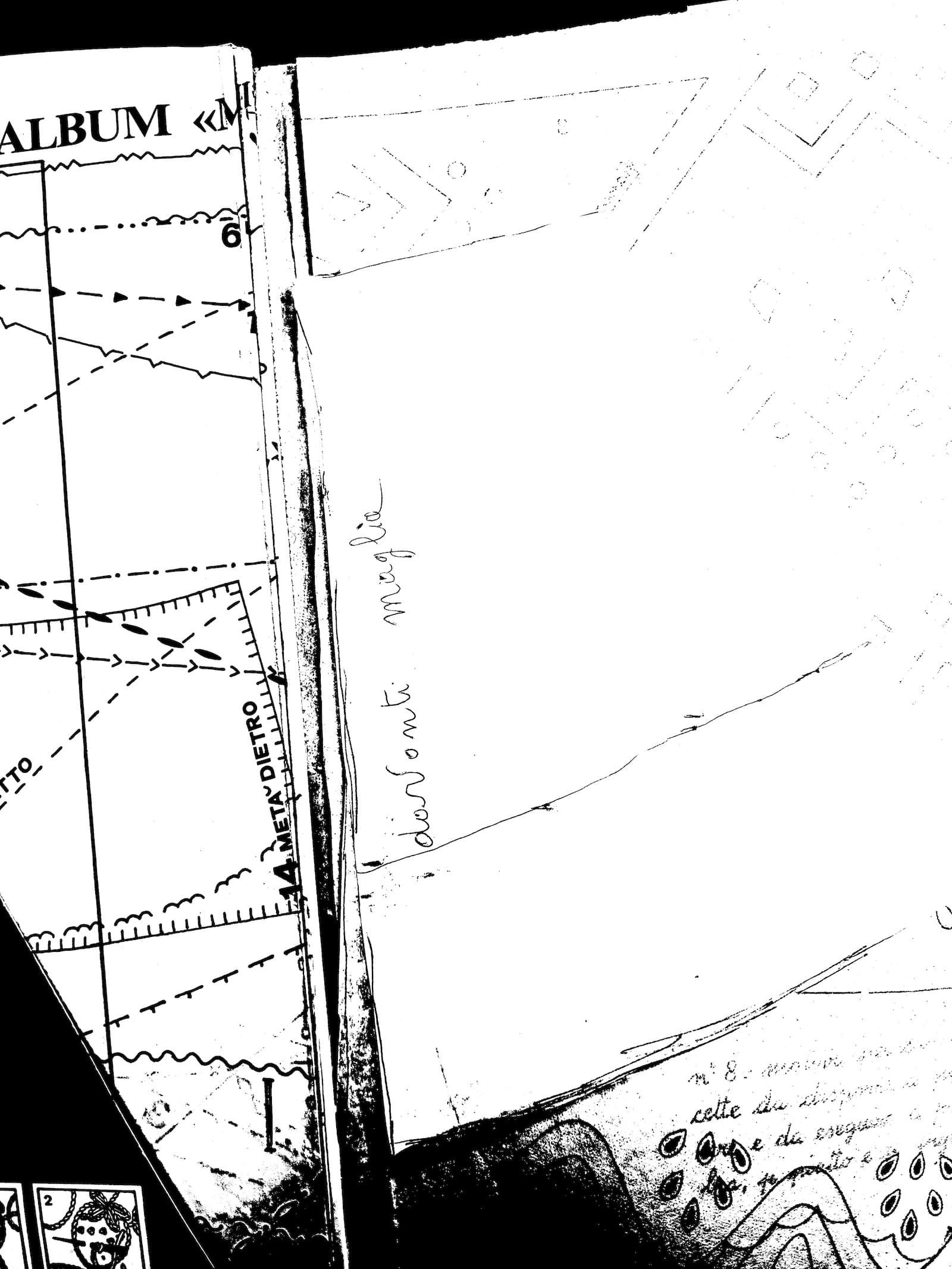
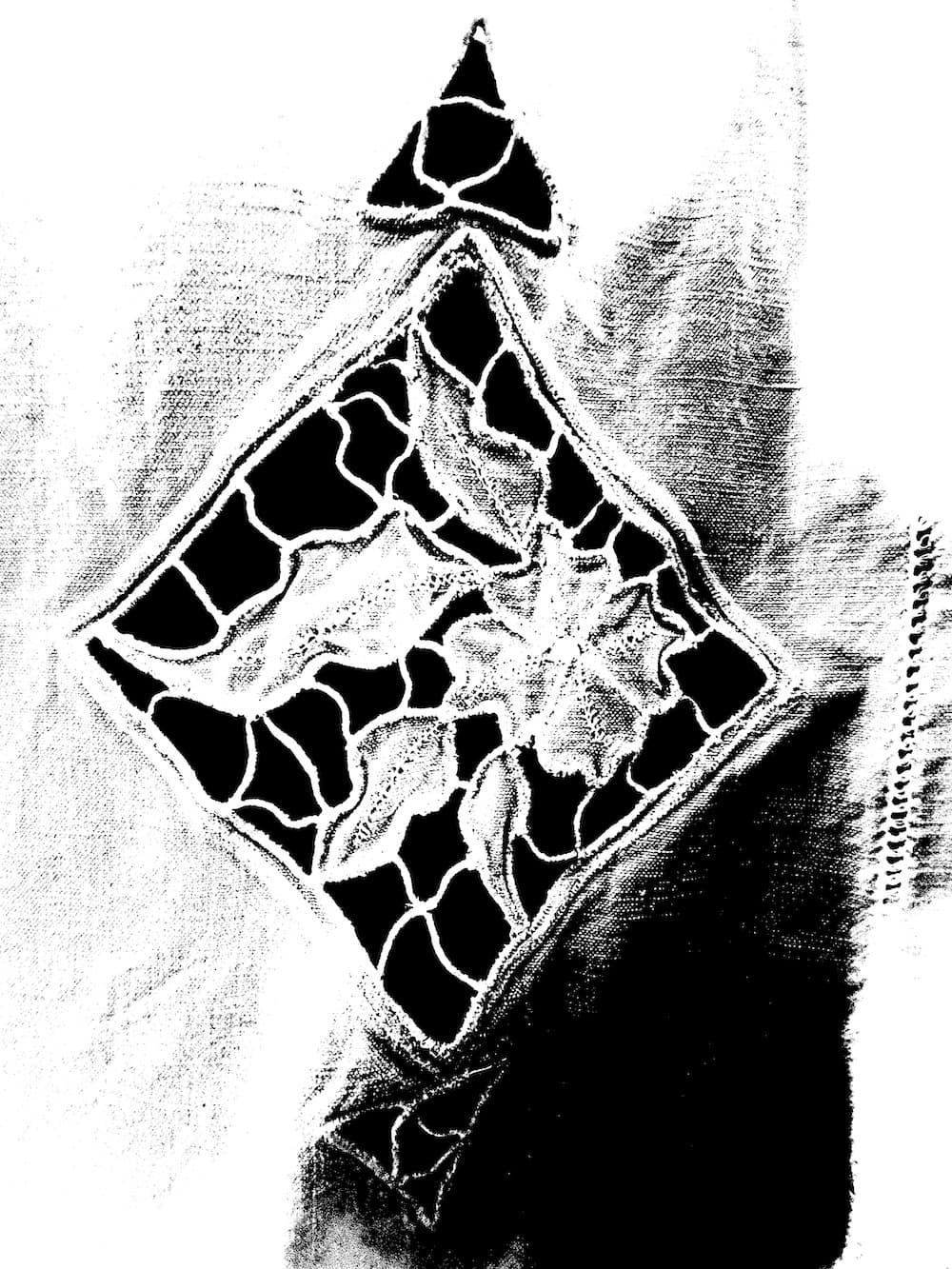
Ángel Bonomini wrote stories and poems admired by Borges and Bioy Casares, besides his work as an art critic and a translator. After Bonomini’s death in 1994 he all but disappeared, and his books are now out of print even in his native Argentina. His rediscovery is the work of the translator Jordan Landsman and Transit Books, the nonprofit press founded in Oakland in 2015 by Adam Z. Levy and Ashley Nelson Levy. After The Novices of Lerna in 2024, this year the press published Slow Elephants of Milan, first released in Spanish in 1978. From it we present “Echoes,” paired with a series of images that Lorenza Longhi, an Italian artist based in Zurich, made in response to the story.
I
⠀⠀⠀
At siesta time, I would go to the Berros’s house next door. The mother, Georgina, was French and would play the violin in the afternoon. The girls, Nélida and Amalia, must have been about twenty years old; I was ten. That family really loved me—they’d help me with my homework, and I’d come and go as I pleased.
⠀⠀⠀
At the Berros’s, in the courtyard, there was a spiral staircase that led to the sewing room. I went up the stairs. I knocked on the window.
⠀⠀⠀
Nélida answered. She said they were sleeping and I should come back later. I heard Amalia tell her sister to let me in. I disliked the idea of having to wait as much as I disliked the idea of leaving. But soon I heard the sound of bare feet and a bolt sliding open.
⠀⠀⠀
“Come in,” Amalia said, naked, with a triangle of dark hair beneath her belly and violet-tipped breasts. And then she added: “Take off your clothes and get in the bed.”
⠀⠀⠀
⠀⠀
Everything happened very fast, like when someone shows you a photograph and hides it in the same movement. Dizzy with danger, all I could do was obey. I took off my clothes and got in the bed.
⠀⠀⠀
Nélida pretended to be asleep, allowing a view of her back, her waist, her thighs, her messy hair. Amalia made herself comfortable and the silent torture began. At the foot of the bed, the cretonne quilt was piled up like a mountain range of flowers.
⠀⠀⠀
In a corner of the room, there was another womanly shape, also naked, that always made me anxious: a headless mannequin held up by a pole on a tripod.
⠀⠀⠀
As the seconds passed, my eyes adjusted to the shadows. A dim light enveloped us all. To my right, Nélida’s back arched at the waist, and her buttocks lay in the shadows, and all the shapes of her pearly skin undulated faintly with her breathing. To my left, Amalia had spilled her breasts toward me, and one of her violet tips was brushing my arm.
⠀⠀⠀
I knew nobody slept in that room. Even the mannequin was like a watchful sentry. The sewing machine had a black-and-chrome head that made it resemble an alert dragon.
⠀⠀⠀
I lay motionless. The two women radiated a heat that almost burned. And then, all at once, like the roar of a sudden storm, I heard Nélida and Amalia erupt into a laughter that obliterated life itself.
⠀⠀⠀
I felt like the spiral staircase would never end.
⠀⠀⠀
II
⠀⠀⠀
Our parents were quiet people. I think it had something to do with their poverty. I also believe they thought life was a risk that could only be faced by paying a kind of tribute—working—and that it was through work, and only work, that one could conquer the following day, not just in terms of sustenance, but also in metaphysical terms, as though work were the price required to maintain the confusing privilege of existing in the world.
⠀⠀⠀
Yes, our parents were quiet, and cautious, and in a way they enclosed us between the walls of their prudence. Vigilant, they kept us within the boundaries of their care.
⠀⠀⠀
⠀⠀⠀
We, their children, were called to fearlessness. Adventure, however literary or superficial, was the only thing that delighted us. Perhaps that was so we could love them from the other side of reality, opposite to the reserved and private zone they inhabited.
⠀⠀⠀
Like me, my best friend lived across the street from Plaza Irlanda. Of the many loopholes we came up with to evade the rigid world of our parents, our outings in the plaza are what I remember best.
⠀⠀⠀
We’d make plans to meet at dusk in letters we left under each other’s doors. We’d briefly indicate the time, affirm that this was a meeting of gentlemen, and decide on the exact meeting place via a secret code. Often, the letters were written in lemon juice and had to be read by candlelight.
⠀⠀⠀
By ourselves, at the hour when the paths in the park took on a violet tone, we’d walk while hatching plans beneath the silence of the trees. Ivy poured from the bronze urns, whose almost cubic bases grew gigantic with the shadows.
⠀⠀⠀
We’d devise incredibly complex projects and debate which monument would be better for burying, for greatest possible safekeeping, the two iron rings we always kept hanging from our belts. The disks symbolized an absolute secret we’d keep, which in turn represented immense truth and total power.
⠀⠀⠀
Once on the ground, we would check the plans we’d drawn to connect the monuments via tunnels, creating an underground network of catacombs where we would safeguard the nameless treasure.
⠀⠀⠀
Our pace would slow and our voices would hardly rise above the silence. And the plaza, almost deserted, would begin to resemble a cavern in the creeping darkness.
⠀⠀⠀
⠀⠀⠀
Afterward, now nourished with mystery, we’d return to the unequivocal world of our parents—a quiet, hard-working world, in which the only adventure was just that: work, silent work.
⠀⠀⠀
III
⠀⠀⠀
On Sundays, my grandmother’s friends would visit. They were from Lombardy. They’d come from Gardone, from Salò, from Riva—in short, from the towns on the Lombard side of Lake Garda.
⠀⠀⠀
My grandmother was still a young widow then. Healthy, strong, clearheaded, her voice a rich contralto. Hardly fifty years old, she had hair the color of copper, very white teeth, and mauve eyes.
⠀⠀⠀
Like I said, on Sundays, her paisanos would come visit, and they’d praise her cooking fragrant with sage, rosemary, and other herbs we grew in the garden.
⠀⠀⠀
At a table under the fig tree, during the summer—which is when this all took place—my family would sit with Giacomo, Agnese, Carlo, Eda, Lucio, Silvana, and, at the head of the table, “El Barba.” That’s what his friends called him. He had the face of a king and a reddish beard that was very well kept, and he wore boots that went halfway up his calves, striped shirts, and—I always saw him in the same one—a jacket the color of my grandmother’s eyes.
⠀⠀⠀
After lunch, which always received the highest praise, they’d reminisce about friends and relatives who’d stayed in Italy, recall old traditions, and finally submit to the ritual of silence and song.
⠀⠀⠀
As is often the case when a group of people spend a lot of time together, a kind of ceremony was established. Each of them sat in their usual place at the table. They discussed certain mandatory topics in a prescribed order. I would say that an unfailing sequence played out until it came time to sing.
⠀⠀⠀
This is how it would happen: a long silence would build. They’d serve themselves more wine. The fig tree would allow a golden light to filter through. And if El Barba detected even a momentary lull, it was he who would suddenly start to sing—one or two slow, emphatic lines. Again, a brief silence. Then they would all begin to sing in chorus.
⠀⠀⠀
And you’d see their green or pale-blue eyes, their striped shirts, the men’s strong hands, and hear my grandmother’s contralto, Agnese’s soprano, Lucio’s bass, the serene voice of Eda, Silvana’s mirthful tones, and your awe before this group of singers would only cease when their voices rose in a held note that resolved in measured laughter.
⠀⠀⠀
Some of them would pour themselves more wine. And then, silence once again. And then, suddenly, Lucio’s thick voice would propose another song. Once more, they’d search their memories for the words. At last, the music would be retrieved, and under the fig tree, through song, the Italians would pretend that time and space were illusory.
⠀⠀⠀
IV
⠀⠀⠀
Fiorella was born in Italy. She was my age. A low unplastered wall separated the backyards of our houses. Sometimes a few small weeds would sprout from between the bricks.
All images courtesy of Lorenza Longhi
Ángel Bonomini
A contemporary of Jorge Luis Borges, Adolfo Bioy Casares, Silvina Ocampo, and Julio Cortázar, Ángel Bonomini remains one of the great untranslated writers of Argentine fiction. His masterpiece, The Novices of Lerna, was originally published in 1972, but Bonomini’s meditations on identity, surveillance, and isolation remain eerily prescient. In his lifetime, Bonomini was the two-time recipient of the prestigious Premio Konex.
Lorenza Longhi
Lorenza Longhi (b. 1991, Lecco, IT, lives in Zürich) studied Painting at the Brera Academy of Fine Arts and Visual Arts at ECAL in Lausanne. Her work takes shape through the reproduction and appropriation of objects and images — from furniture to visual material drawn from advertising — to investigate structures of power through craft techniques and unconventional materials.
Solo shows include: Centro Pecci, Prato; Swiss Institute, New York; Kunstmuseum Winterthur, Winterthur; Kunstverein Freiburg; Kunsthalle Zürich, Zürich; Ordet, Milan; Weiss Falk, Basel; Fanta-MLN, Milan; and Plymouth Rock, Zürich. Group exhibitions include: Fanta-MLN, Milan; Galerie Oskar Weiss, Zürich; Centro Pecci, Prato; Halle für Kunst Steiermark, Graz; Layr, Vienna; Bonner Kunstverein, Bonn; Macro, Rome; Fondazione Prada, Venice; Kunsthalle Zürich; Quadriennale di Roma, Rome; and Fondazione Sandretto Re Rebaudengo, Turin. In Milan, she was co-founder of Armada (2014–2018).
In 2020 she received the Shizuko Yoshikawa Advanced Award for Young Women Artists and the Swiss Emerging Artist Prize by Société Générale. In 2021 she was Artist in Residence at the Swiss Institute, New York. In 2022 she was among the winners of the International Sculpture Prize by Fondazione Henraux and received the Manor Kunstpreis.
We’d like to thank Transit Books for allowing Chiaromonte to feature this short story. Transit Books is a nonprofit publisher of international and American literature, based in the San Francisco Bay Area. Founded in 2015, Transit Books is committed to the discovery and promotion of enduring works that carry readers across borders and communities.
finanziato dall'Unione Europea - Next Generation EU


