Wilhelm as Hauptraum

Wilhelm as Hauptraum (2025) è un’opera video di Yuki Okumura, presentata originariamente alla Vienna Secession. Il lavoro prende forma attraverso il racconto di Wilhelm “Willi” Montibeller, ex capo allestitore, che ripercorre la storia della sala espositiva principale dell’istituzione a partire dalla propria esperienza diretta. La narrazione si sviluppa come una storia soggettiva dell’Hauptraum, costruita attraverso le pratiche di allestimento, manutenzione e uso quotidiano dello spazio. Il video è qui presentato insieme a disegni realizzati da Montibeller dai ricordi, che ricostruiscono mostre del passato.
Hello, welcome. You hear my voice, but I’m not the artist. It’s a voice of me. My mother tongue is German. But Yuki asked me to speak English.
I introduce… My, my name is Hauptraum—my name is Hauptraum. In English, it means “main space”. The main space of the Secession. It’s not the Galerie or the Grafische Kabinett or the foyer. It’s the—I’m the main space.
I am born in 1898. It’s a long time ago. And some people said, “Hey, it is the first white cube.” I’m the first white cube in—maybe in the world. And until now, it’s a big white space. I am the most big space maybe in Austria where you can—where people can see art.
And in the Secession, we really have a very good colour. And this is really white. It’s a special white. It costs about three times more than a normal colour. But a normal white colour is not white. Because I think the pigment is not good. It makes me proud—it makes me proud.
And we had luck after the Second World War. I was destroyed. The roof was laying into the main space. Yes. It was completely destroyed. And we really had luck. They really fixed it again.
I’m not sure when it was—when they called me Hauptraum. I don’t know when they started to say “main space”. [—] ‘65, yeah? 1965, yes? It was a very good time for the Secession, I think, in that time.
I think it’s a process when you’re young, and you start to be yourself, maybe. And you know, puberty… I think you start to be a person. And you think about your name. Yes, for sure. I wanted to have a shorter name. And then, my grandfather also… His name was also Wilhelm. He died before my time. But then I wanted to be Willi.
Yeah, in 1986, Krischanitz did the renovation. Krischanitz is an architect. He did the columns in chrome steel. And they were very shiny. But it was too nice for the artists. I don’t know how much. I think the fourth artist wanted to have them white.
And later, Willi came, ‘96. And often we had fun with the team, with the artists. And many artists wanted just to deal with the space: my body. And they use the space as a playground. And it is a challenge for every artist. It’s too complicated, the space. It’s too symmetric and too big. And the artists look, “Hey, what was in the main space before, before, before, before?” “Hey, crazy, crazy, crazy.” “I have to do crazy also.” Crazy things, yes.
Yes, I hosted many exhibitions inside myself—myself.
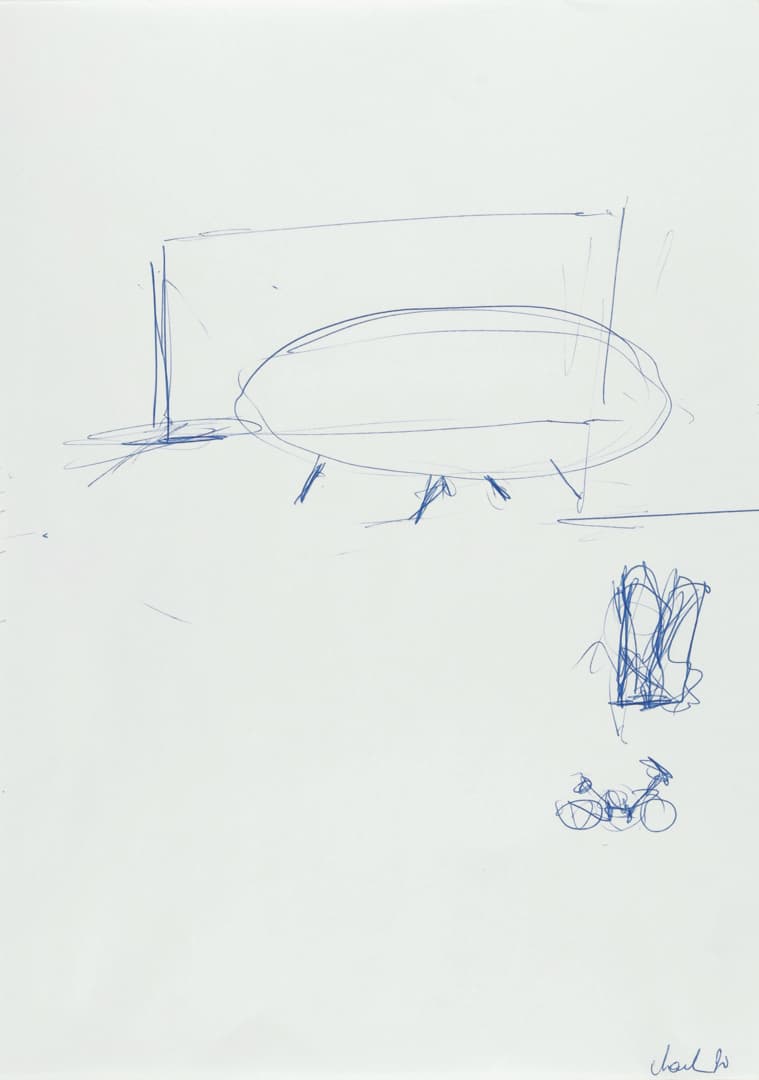
[—] My first exhibition? It was… My first exhibition was of Carsten Höller. We had the Futuro House here. There, he had… The nice—most nice thing was the Futuro House of Suuronen. Of a Finnish architect. It was like a UFO. It was 8 metres 50. I don’t know what was here. I think here was the helicopter or something. And he had also a bicycle—electro-bicycle in the exhibition.
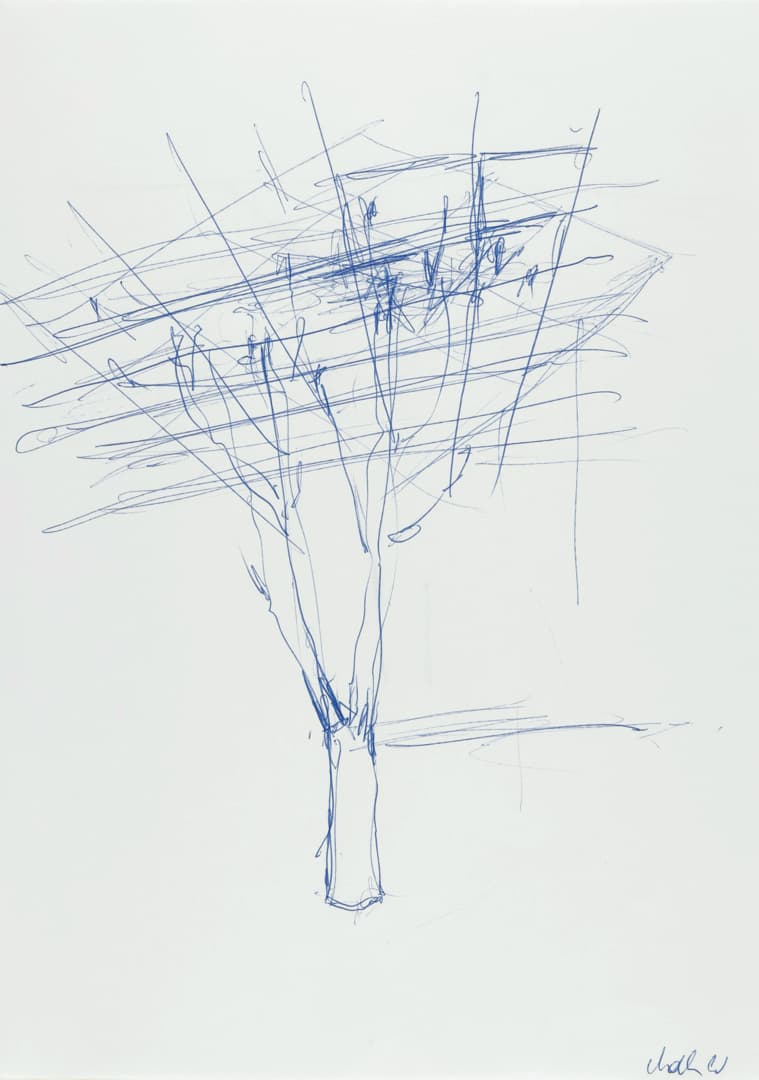
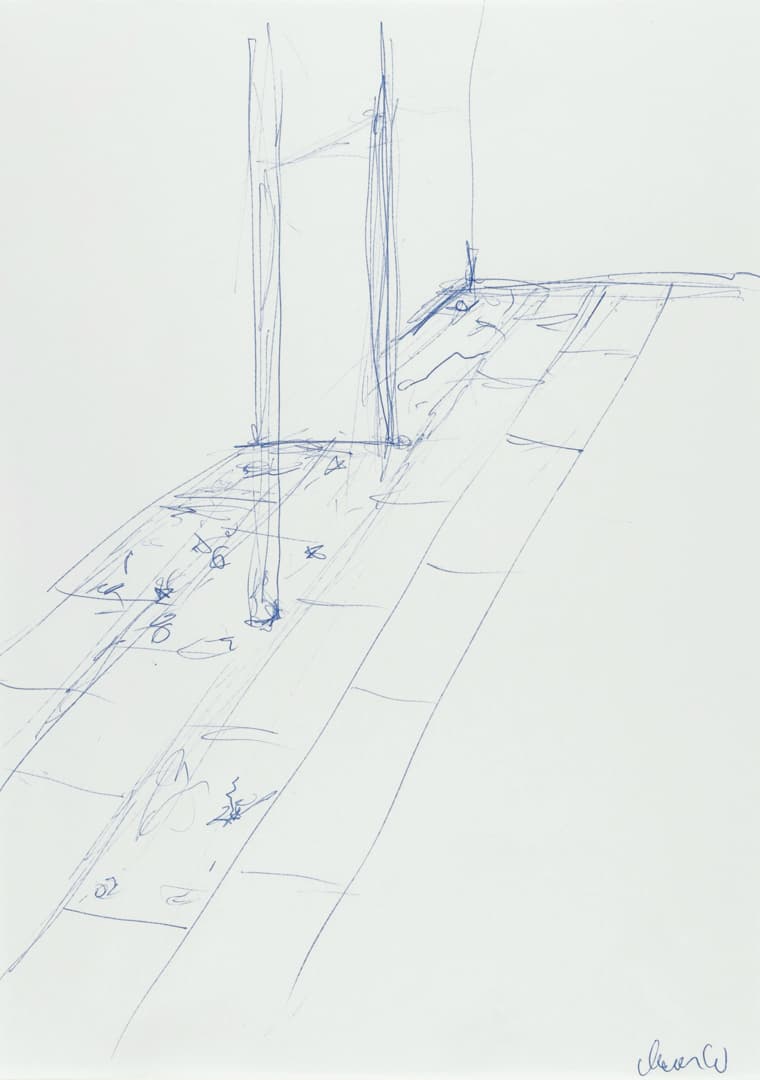
Oh, there was an exhibition of Zoe. Zoe Leonard. It was a very nice exhibition. It was a tree. The tree was here. It was about here. Yes, about here. And the tree was going through the glass—through the ceiling. Yes. It went through the ceiling. Yeah. It was very nice. What was very complicated was, the tree came in just 1 metre. No numbers. Nothing. No photo of the tree. We didn’t know if it goes to that side or to that side. That crazy. It was just standing on the floor. And here were a few photos of… She’s also a photographer. She was very very nice. And also, she had a girlfriend from Switzerland. And I could talk with her in my slang. I’m not from Switzerland. But where I come in the—in West Austria, we speak about—like Switzer. They have about the same language.
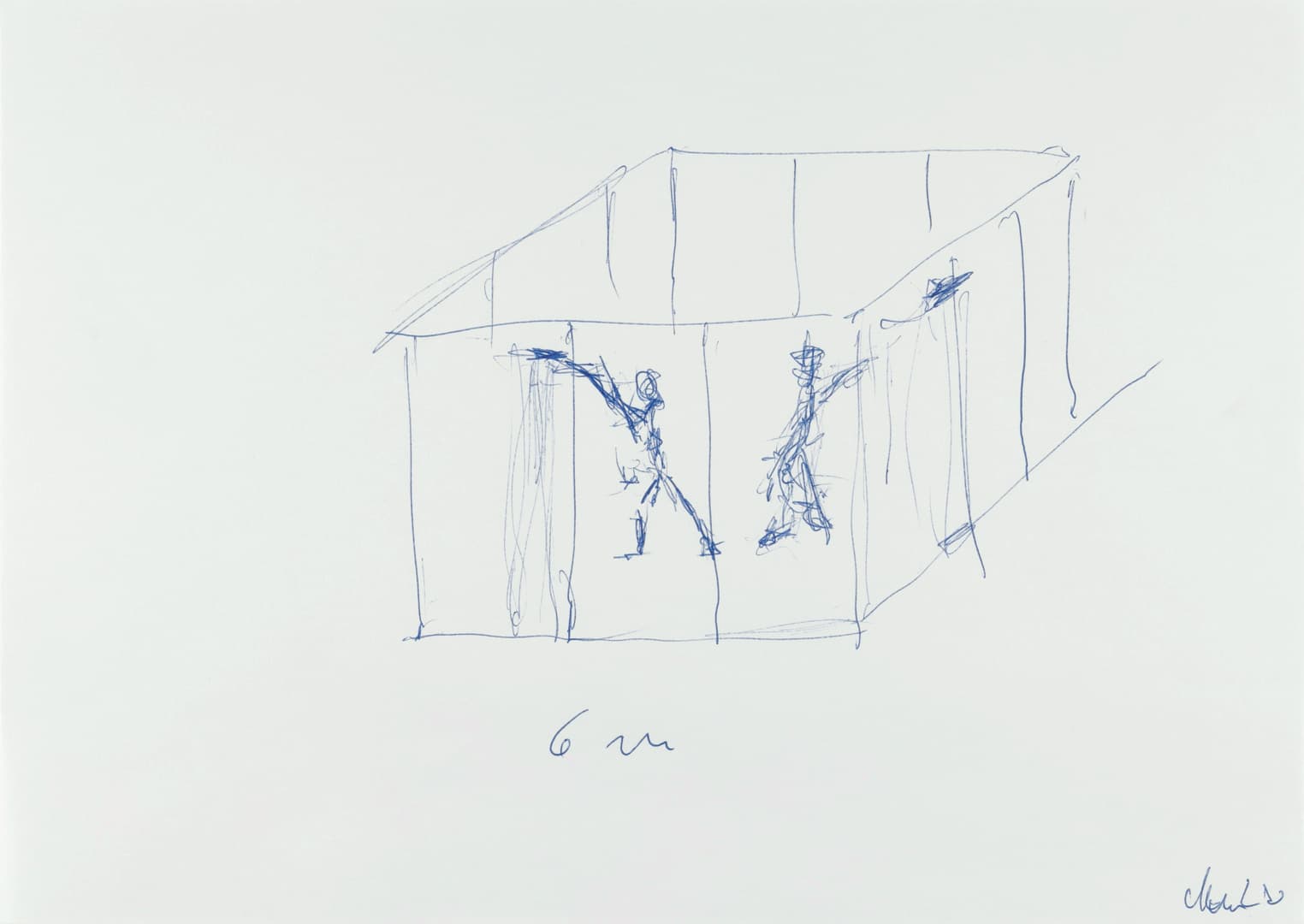
And once… Yeah, Elmgreen and Dragset. Yes. Oh, they had a cube out of glass. 6 or 8 metres—8 by 8 metres. And they did a performance during the opening. They did the white cube. They just—were painting white and washing. Painting white and washing the glass. And they did it a few times. Uh, it was ‘98? Or, ‘97. It was a very good group in that exhibition. Yes, yes. I know the work of Monica Bonvicini. She did the floor. And the idea of her was, the floor has to break everywhere. And the complicated thing was, we had to place Styropor under the floor. But later it was like Gips. What is Gips? [—] Like that. It was… If you do a board here, and then, after two days—four days, it breaks because of the weight of the visitors. Yes. There are not much artists wanting to change the floor.
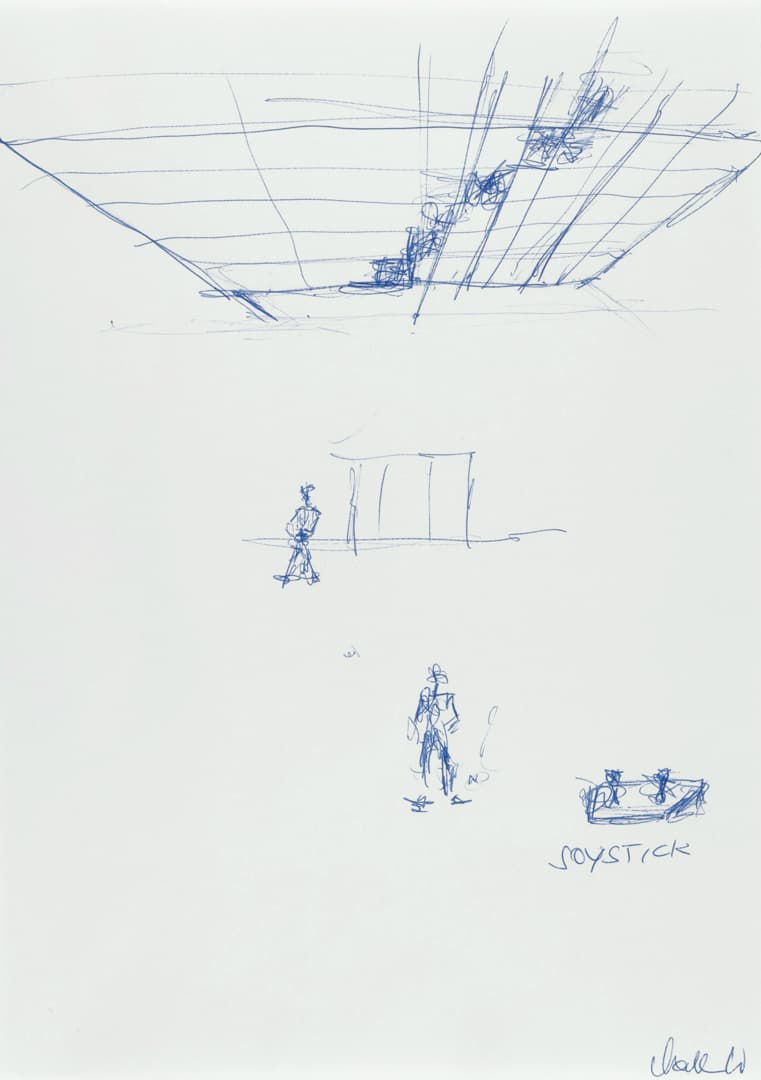
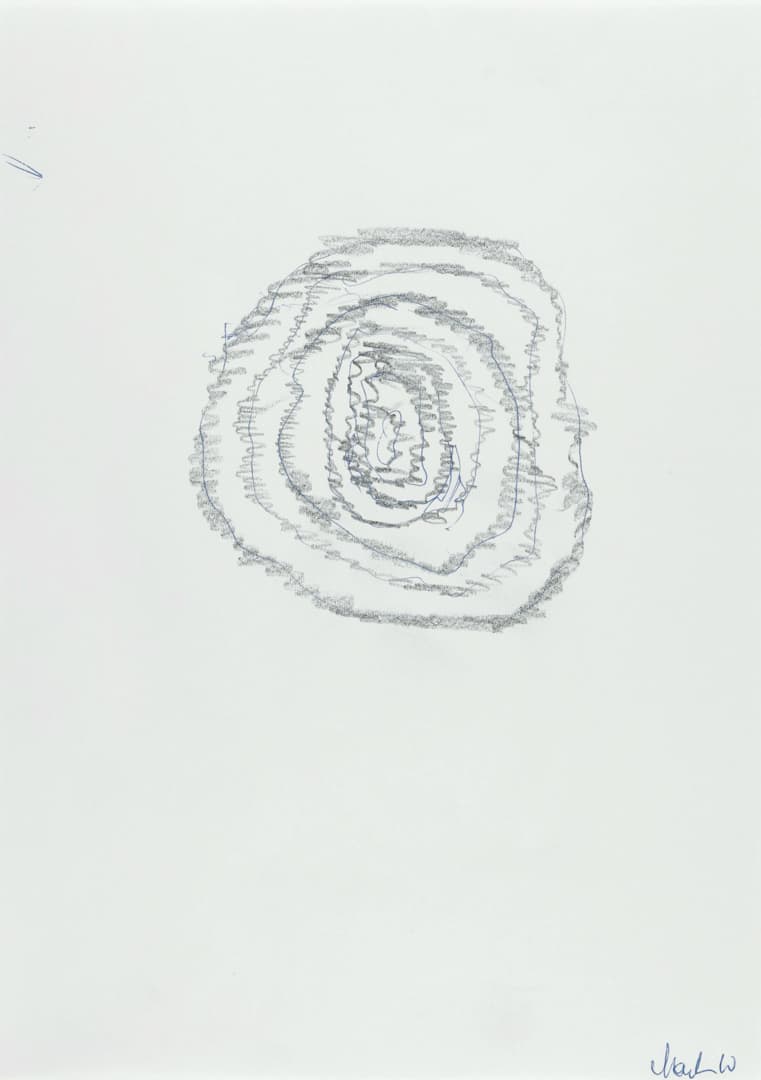
And then… There was an exhibition of Pierre. Pirre. Pierre Huyghe. Yeah, Pierre Huyghe. It was very nice. He did the game at the ceiling with the… It is 12 by 12. Glasses. And every glass had a light. And it was like the first computer game. You could stand—one stand here and stand here, and you could play against… With a cable, you could play it like… Usually it was on TV. And this was a big TV on the ceiling. You could play standing here, looking to the ceiling, and… Yeah, here were three videos with the Bruno Ganz project. [—] Ah, yes. Phew. I think that work was somewhere here. He wanted just to know what happens when we try to see which colours are here. You know, every artist wants a different colour in the whole main space. This was in…? [—] 1999! It was, yeah, just 13 years after the restoration of the main space. And we had a lot of layers of different colours. Every artist wanted to change the colour. It’s yellow, it’s black sometimes, and then it’s white. And that’s what happens. Or, Renée Greene wanted to have, I don’t know how much colours. [—] How we did it? We did… With the Flex, with the angle. Yeah, it was just to remove the colour until the wall. And just a little point. It was round, like a tree ring. Just the layers—the different layers of the colour. It was round, yes. It was round. It was like an eye. But I don’t know. But I think Pierre just would like to have a painting. It was like a painting for him, I think. Just, yeah…
And there was an exhibition of Simon Starling. Simon Starling, yes. Simon Starling, I know. But in that time, I think I was in—maybe not the whole setup, but a few days, I was in Venice. But I remember a piano somewhere, with neon lights down into the space… Had also to do with some music. I think the light is very important. Very important for the space. And also the light system. It’s also important that the light comes here, and then the flat ceiling, and the perfect glass. With the diffuser, you have less shadows and so on. It’s very important for artist’s work.
Oh, yeah. And there was an exhibition of… Oh, it was a Turkish artist. It was Ayşe Erk—Erkmen, you know. Ayşe Erkmen. Ayşe Erkmen did a project to do something with the elevators at the ceiling. The elevator is the lift. The elevator for changing the lights, also to change a glass maybe. She wanted to have like… A cube is going. And it was no cube. Then we had—we built it like a space on the elevator. And then we filled it with neon lights. And then it got much better. She also did a generator. People thought maybe they have to do something. He’s standing now, yeah. Then it went. It’s luck. Sometimes they were working, they were not working. It was a generator made that.
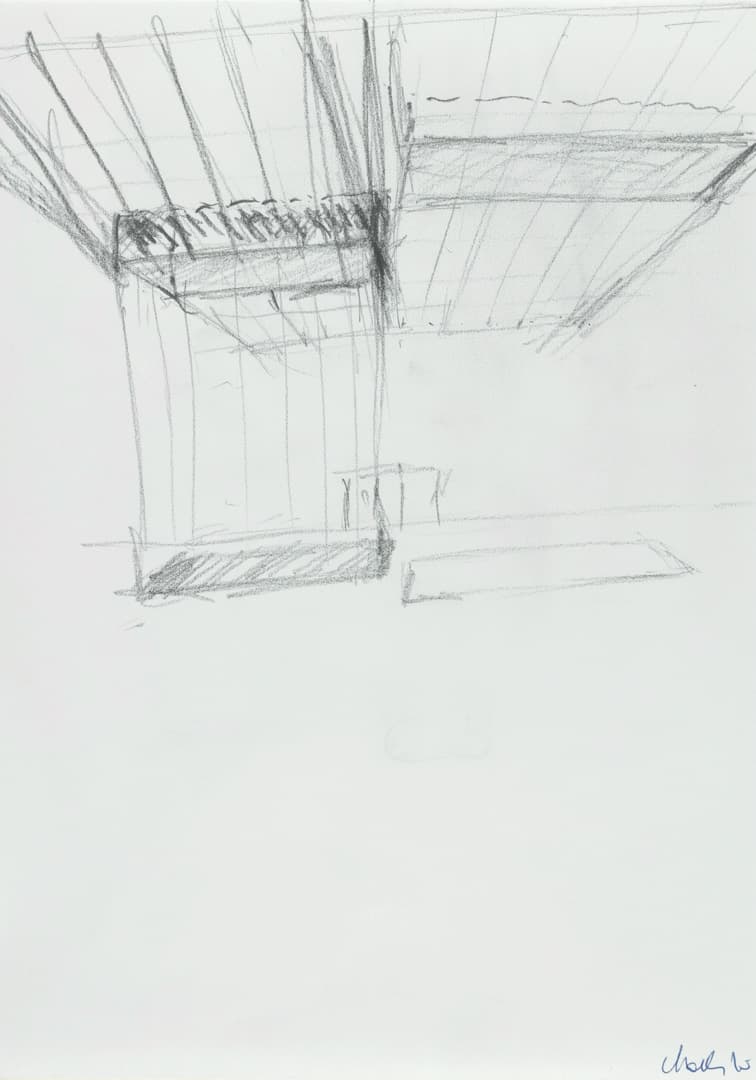
There was—there was an exhibition of Hans Schabus. Oh, it was very nice. We closed the brick—we closed the main entrance with the bricks. Whoa. It was fantastic. It was perfect. It was—Matthias Herrmann was the president. And then the first… When we talked about the exhibition, what he wants… I thought, “Hey, did you joke with me?” You know, here is a little space. No, sorry. The storage here. And here are stairs. And then we opened the wall to the Gallery. They are crazy. But we did it. The tunnel was starting where the toilets are now. It went through the cellar, through the cafe. And here you came out of the tunnel and went into that space. It was like the cube of his atelier. Just about here. Everything was out of cardboard—white cardboard, I think.
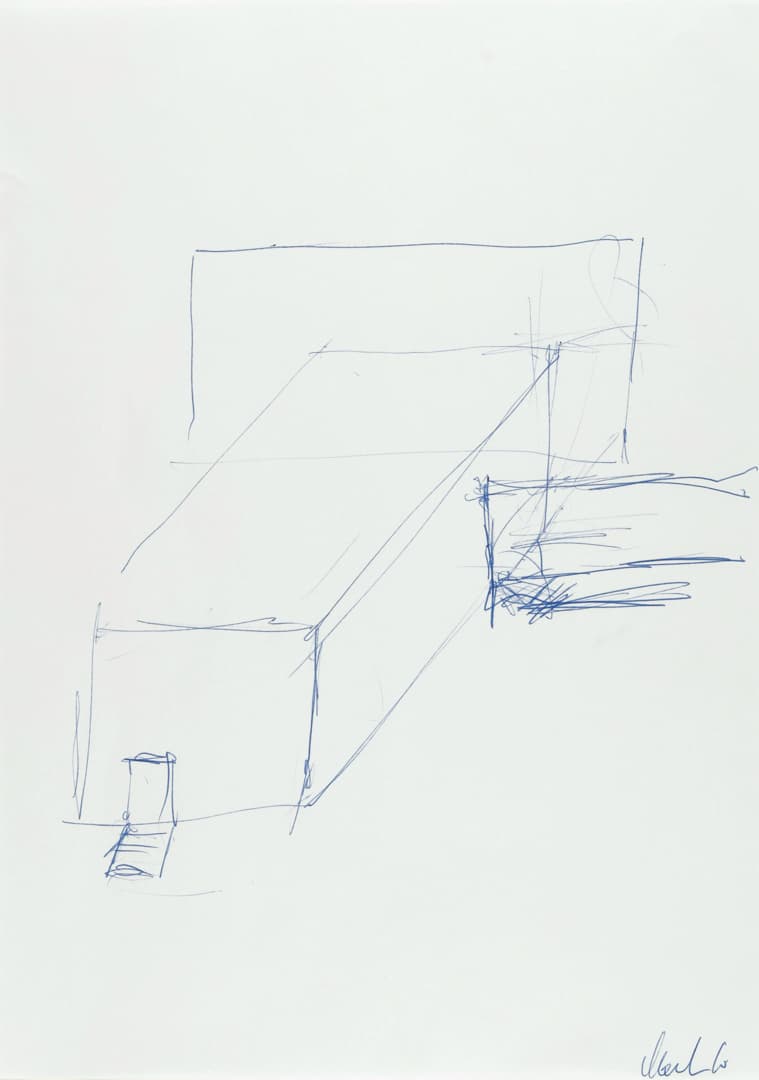
It’s 24 metres here. It’s 29. I just want to tell a story about the Polish artist. He was crazy. The curators were communicating with him and I got a plan. And he needs a wall. It has to be 21 metres and, I don't know, 5 centimetres and 7 millimetres long. In millimetres! I thought, “Hey, what does he want?” [—] Nein, nein. Not Kovanda. It was…. We tried to make the wall as he wants. But we had… It was the time we had no digital measure. When you have a measure with tape, you know, it can be two centimetres longer or… Later, when he was here, he told me he’s hanging one picture to one picture to one picture. He measured one picture, one picture, the next picture, and the next. And this is 21 metre… There was no space between. This was the reason why he wanted to have a wall exactly in that measurement. Paintings, and photographs, and everything. Tack, tack, tack, tack. It was in the time of Holub. When Holub was president.
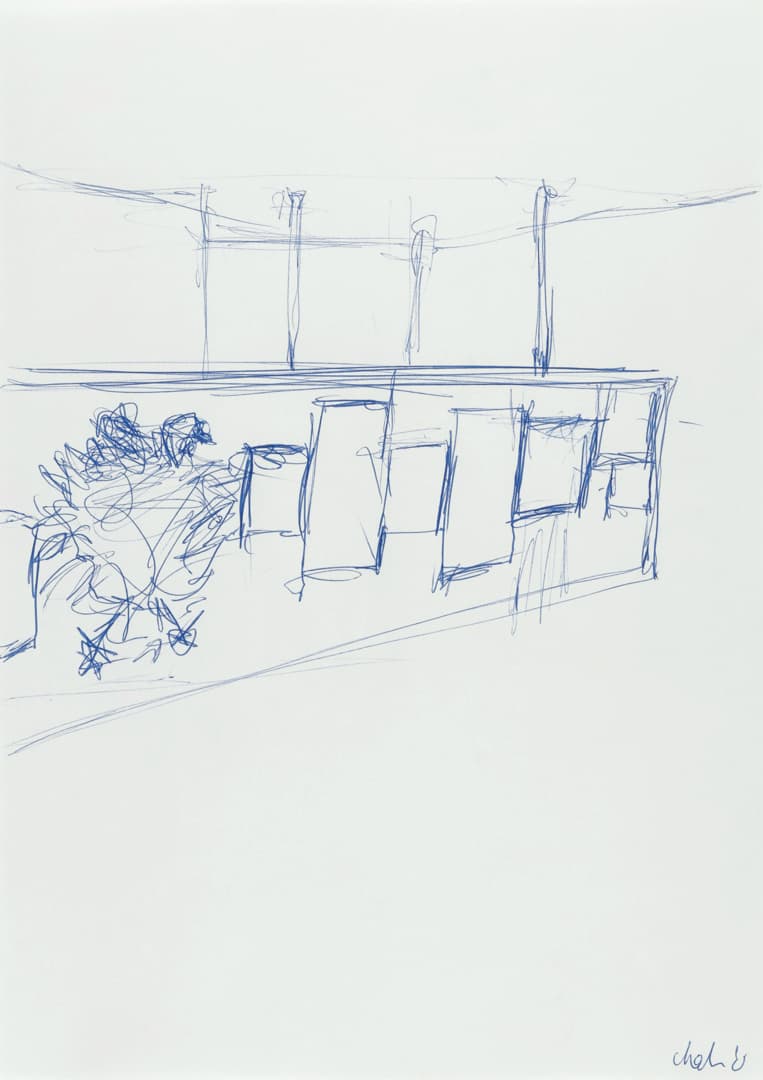
And later, there was an exhibition of Paweł Althamer. Yeah, I liked him. We built a tunnel here. It went through here. People could go through. People went through my body, maybe. Without seeing anything. Anything of the main space. You came through here. Then you came… The garden begins here. But then you went down. It was a little bit crazy. Because in the garden were a lot of people. Homeless people. And we gave food every day to that people. But more and more people came. Yeah, I don’t know. I don’t know if Paweł knew that. [—] How the tunnel was built? It was just wood. It was wood boards. And, it was just like a wall. It looked like a wall. And it should look like a wall. I supported it with triangles, triangles, triangles, and yeah. And it was open day and night. And I feared if it’s open during the night, if strong people do that, they are in the main space. But it didn’t happen. They didn’t do that. [—] Oh no, this is Mätte. He is in Bregenz now. De-install, yeah. It was a photo. Yeah, it’s before the time. We had not so much digital photos in that time. A part of the wall of the tunnel, we just let fall. We did, swish. Just. We throw the tunnel. We… It was, bwoow.
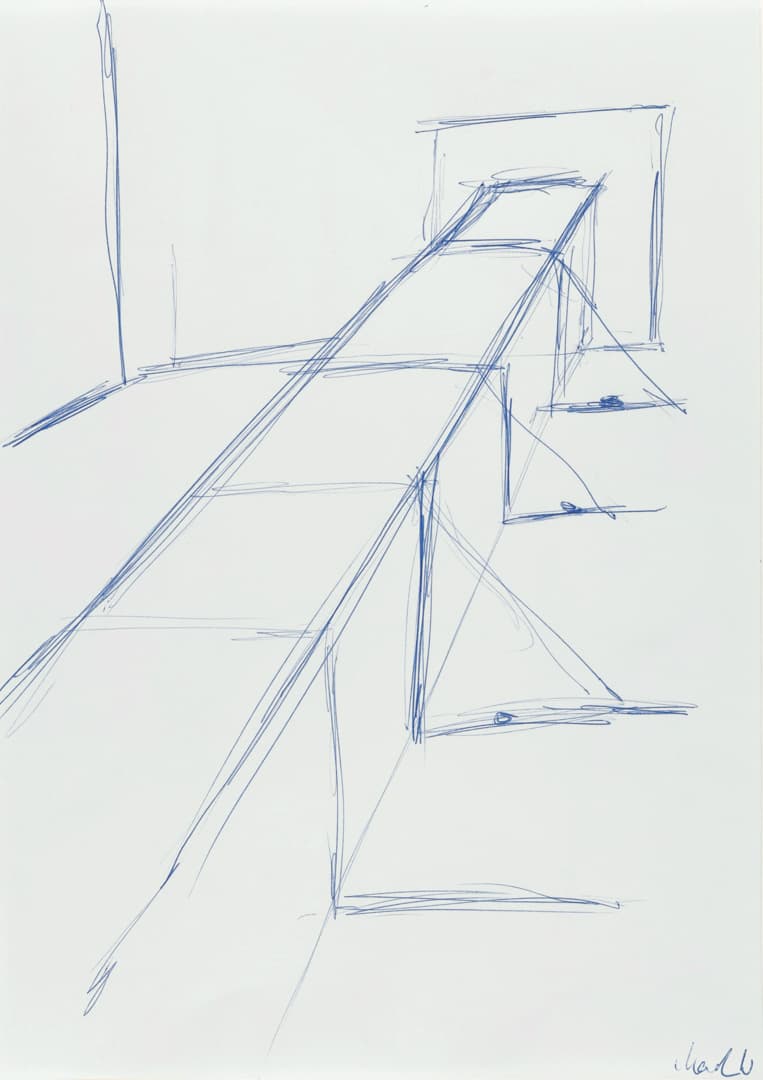
Do you know Paul Petritsch? He and Nicole Six drove with a motorcycle on a motor ring. They drove symbolic around the world. And Nicole Six… I don’t know if I see it right, but she was one day in the wall. And nobody could see that. For one day. We had to build the toilet inside and so on, yes. And then we closed the little space with board. I think until now it’s board here. But in the main space, there were just posters with the photo of the motorcycle race. Yeah, this was one of the really crazy interventions, yes. It was crazy.
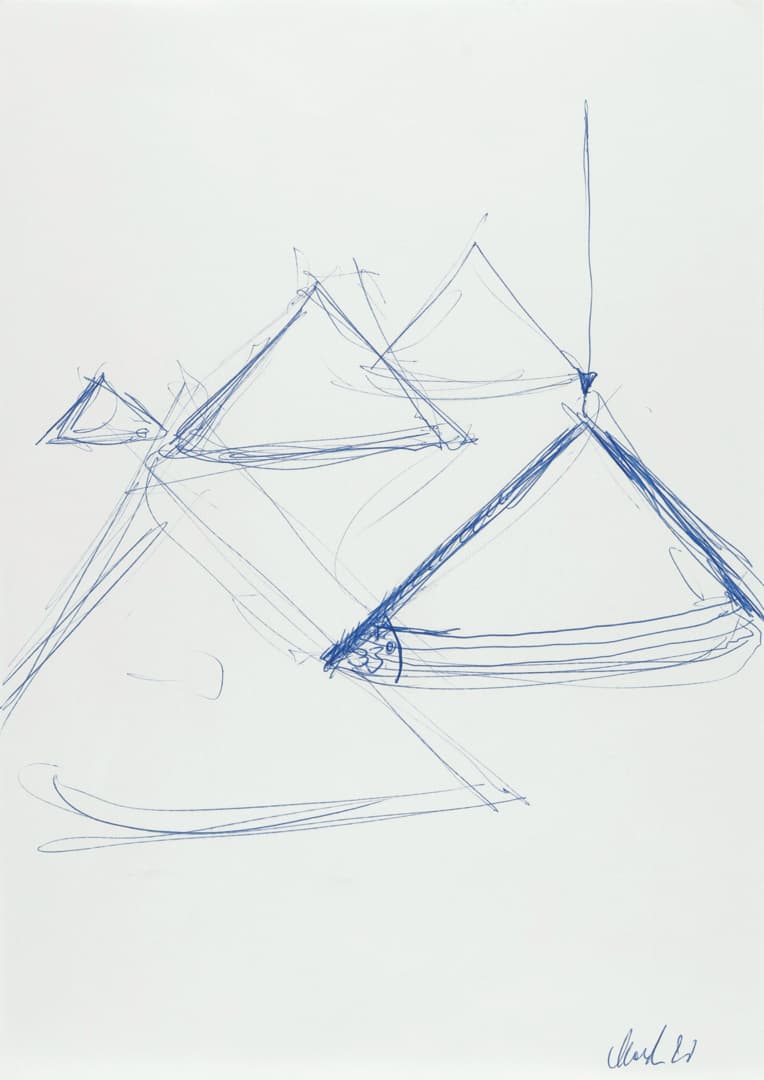
There was an exhibition of Lara Almarcegui. Lara Almarcegui did a nice project. She wanted to recycle Hauptraum: my space. And she was counting how much bricks, how much concrete, how much Gips. She wanted to build a Haufen. Haufen… What is it. It was like mountains—little mountains. [—] How many? Six or seven mountains, yeah. I think here was the biggest one. This was the bricks. It was about like that. Everywhere was… But the glass and a few were not very big. And the complicated thing was, a square metre is able to hold 400 kilo. And if you have materials like concrete or bricks or something like that, it’s too much weight in… And then we had to do a construction. I thought with the wooden construction, it’s too complicated and we have less time. It was late. It was not possible. Then I had the idea with Styropor. I was, I was counting how much can I cut. It’s important because less weight. And what’s important with Lara: I knew if the angle is not okay, it looks like nothing. If you see when concrete or something is in somewhere, like a mountain, it has an angle. At the computer, I was measuring the angles of the—how the materials fall. I remember 31 until 33 was perfect. Degrees, yes. Because I knew when the material is not holding on the Styropor and so on, you can forget it. You will not have an opening. The angle was the perfect. And my team had fun with it. They really had fun. They were proud—“Hey, we did that”—when the opening was… And you see Haufen, Lara’s little mountains. It was really expressive when you came into the main space—it was…
We did a few very, very good things. And artists know that. Most of the artists were very… They had fun with us. And I had very good times with artists. Every artist wants different things and different techniques. I just had to hear what he wants, that it looks like. And this is an important thing. There is one who wants everything in millimetres. And other one wants it to look like trash—everything. And you have to feel what he wants. And often we had fun with the team, with the artist. Yeah, nice rememberings. Rememberings is the right word? [—] Nice memory! Nice memories. Yes, for sure. Yeah.
Before, I had a thought… Hey… I wanted to be an artist. But the more I worked in the Secession, the less I made art. It nerved me. There were times it nerved me. But then, until 2005, it was… I thought, “No, it’s not important to be an artist.” You can just go one way. Not two ways.
No, but I’m happy here. It’s a very nice house. I like it. I like the garden. I have a little garden, but it’s a lot of work. If the garden is finished, I will find things I can do. It’s an old house.
My life is very relaxed. And I like to just move into the day. Every day. It’s nice. It’s nice to be here. And it’s nice to live just into the day.
Yuki Okumura (1978, Aomori) esplora la concezione intuitiva e la messa in atto procedurale di azioni orientate al caso, simili a giochi, come modalità di lavoro che consente a chiunque di tradurre, nel qui e ora, non solo le condizioni e i contesti di un luogo, ma anche la propria personalità e biografia. Tra le mostre personali si ricordano Yuki Okumura, Secession, Vienna, 2025; 136 Locations – 956 Intersections, 20 Albert Road, Glasgow, 2024; e The Man Who, An Ephemeral Archive, Keio University Art Center, Tokyo, 2019. Tra le mostre collettive figurano Primary Forms, varie scuole elementari della Masovia, 2025–2026; Medium and Dimension: Plastic, CS-Lab, Tokyo, 2025; Parasite the White Cube, Het Bos, Anversa, 2025; u – New Project Spaces, Kunsthalle Zürich Backrooms, Zurigo, 2024; e Aichi Triennale 2022: Still Alive, Aichi Arts Center.
Con Wilhelm Montibeller che narra e mette in scena i propri ricordi personali delle mostre che si sono svolte nell’Hauptraum della Secessione di Vienna, il film è stato presentato in anteprima come installazione espansa nella mostra personale omonima di Yuki Okumura del 2025, tenutasi nello stesso spazio (a cura di Bettina Spörr). I disegni — grafite e inchiostro su carta, 29,7 × 21 cm ciascuno — sono stati anch’essi realizzati da Montibeller, ancora una volta a partire dalla memoria, per la pubblicazione della mostra (con ringraziamenti speciali a Tina Lipsky). Il film e i disegni sono stati poi presentati insieme per la prima volta nella mostra What Is Real? all’Okura Museum of Art di Tokyo, nel 2025 (a cura di Adam Szymczyk).
Video credits: Yuki Okumura, Wilhelm as Hauptraum, 2025, video HD, 22 minuti e 33 secondi
Racconto: Wilhelm Montibeller | Videocamera portatile: Luciana Janaqui | Camera aggiuntiva: Yuki Okumura | Maquette: Miriam Bachmann, Hans Weinberger | Coordinamento: Bettina Spörr | Commissionato dall’Associazione degli Artisti Visivi Vienna Secession | Per gentile concessione di MISAKO & ROSEN, Tokyo.
Tutti i disegni sono di Wilhelm Montibeller.
finanziato dall'Unione Europea - Next Generation EU